The many ways in which e-RUPI could alter the country's economic landscape

e-RUPI: The mechanism could eliminate dual pricing and target the black economy, while taking the nation one step forward towards establishing its own digital currency

e-RUPI
Subhomoy Bhattacharjee New Delhi
7 min read Last Updated : Aug 11 2021 | 9:09 PM IST
Dual pricing of many commodities, from subsidised rice and fertiliser to concessional train tickets, could become history with e-RUPI. 

Commentators have excitedly discussed how close or far off from a digital currency India’s e-RUPI is, but they have missed noticing a huge clean up of government accounts, including potential generation of black money which this new system makes possible to target. 

e-RUPI was launched last week by the government. The banks are, of course, figuring out what will be their transaction cost to handle the volumes that NPCI expects e-RUPI to generate. There are no figures as of now, but obviously they will generate it as commission from those like governments and companies who buy e-RUPI. For the telecom companies the money is visible on the table. It brings back the use of sms. The ubiquitous Whatsapp shall have to find a way to worm its way into the new business. 

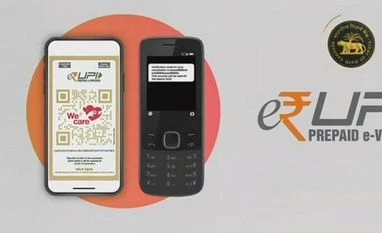
As a voucher e-RUPI is a no-frills technology. The National Payments Corporation of India (NPCI) defines it as a one-time payment mechanism. So if your company wishes to make a payment to you for a particular benefit like school fees for your children or for filling petrol, e-RUPI will work. From the 11 banks which have agreed to issue e-RUPI, your company can buy, say, a hundred thousand vouchers. Each of these vouchers may be worth, say, Rs 5,000. To ensure the voucher cannot be transferred by a recipient, there is a gateway. It shall operate only on mobiles and can be used only once for the designated payments. 

Clean up act: 

At present the biggest transformational impact of e-RUPI is about re-ordering the government’s subsidy architecture. NPCI makes it clear e-RUPI can be used by a government agency to give out food or fertiliser subsidies which will be acceptable to a merchant as a valid payment from a customer. So the next time a farmer eligible for fertiliser subsidy gets an e-RUPI voucher on his cell, he can go to the shop to buy his bag and pay through a combination of cash and e-RUPI.

With e-RUPI then, there is no need for a government to implement dual pricing. A bag of fertiliser, monthly sugar quotas or a train ticket can be priced at market-linked prices. There is no need for the departments to maintain a record of dual prices and most important measure how much has been allocated for each price. A kilogram of sugar can be priced at whatever the market bears, anywhere in the country. For those who need subsidies the government can offer e-RUPI vouchers. Make no mistake, while medical bills are the first target under this scheme (ministry of health and family welfare is the first department to have on-boarded the scheme), there is a shrewd political dividend which is expected or else there would not have been so much of a publicity for the scheme. 

One may ask, how different is the system from a cash transfer into the account of the same deserving cohort. It is vastly different. e-RUPI will make a difference for those subsidies where there can be a market price for the goods or services. These are the critical food subsidies, LPG subsidies, train fares or even tuition fees and at a stretch medical bills. 

There are other subsidies that have no market equivalent like those for clean water supply, building toilets under Swacch Bharat Abhiyan, irrigation schemes like Krish Sinchai or pension schemes and employment programmes like MGNREGA. e-RUPI will possibly not be a success for them. 

At present for both varieties, the central or state governments offer subsidies through basically two means. The first of them is direct benefit transfer, which means the subsidy arrives as a bank transfer mostly in the Jan Dhan bank accounts. These bank accounts have become ubiquitous (there are over 428.3 million Jan Dhan accounts, which almost covers the entire low income families in India) The linkage with Aadhaar weeds out duplication. The government’s DBT portal notes a sum of Rs 17,75,119 crore has flown into the accounts of beneficiaries since when this route was opened up in 2013. 

The second option to offer subsidies is through the public distribution system or PDS. Food subsidy is one of those. The families have to obtain a ration card to line up at a fair price shop to buy the subsidised sugar, rice, wheat, or pulses.

The PDS is not only prone to leaks despite improvements made in tracking mechanisms, there is no option for the families to opt out of them to buy from the market except at a higher price. In some states there have been pilot DBT systems where they shall first rustle up the full price and then claim reimbursement. Similarly in Ayushman Bharat the payment is for reimbursement of hospitalisation expenses which means a poor family often skimps on seeking medical help except in emergencies. Data shows women are the last in a family to get to a hospital, even in an emergency.

The introduction of e-RUPI could be a game changer in these circumstances. With the vouchers, the family can buy their food requirements from any shop, paying partly in cash and partly through e-RUPI. Since the merchants incur no costs, there is no disincentive for them to block such purchases. The government portal says “e-RUPI does not require any kind of service provider to make payment”. Government departments will not have to keep records of food items sent out through the PDS route and because there shall be no need for fair price shops, there is no incentive for siphoning off supplies. In the case of fertilisers the government is saving the cost of arranging special shops to sell the subsidised bags and then toting up the sales, country wide. It is a tremendous advantage that can accrue for each government. Imagine bus or train tickets being priced uniformly. Those who need financial support get an e-RUPI voucher. 

The clinching advantage for e-RUPI is that it does not need a smartphone, digital payment app for even a bank account to operate. Even a basic phone is fine since the verification code shall arrive through sms. With the voucher on the phone a person can make the payment wherever it is accepted, and procure the goods or services. To take an example, if a government wishes to offer a benefit to a migrant worker, it shall suffice if the worker’s phone number is available and the worker is identified as a migrant. 

From e-RUPI to digital currency?

There is no way one can mistake the just introduced e-RUPI by the government as a digital currency. The constituency who are expected to benefit the most from it, India’s low income groups, shall be most surprised if it were so.

Make no mistake, however, this is one of the first steps in a country like India where digital literacy about money has just begun to spread. For digital currency to take shape the people in the lower income group would first need to be convinced that it can buy government supplies. 

In an interview with the media former finance secretary, Subhash C Garg has correctly pointed out e-RUPI is not a currency. But in the future, to make people believe that a mobile signature is a currency as much as a piece of paper, e-RUPI is a useful first step. And it is simple. It can develop the belief among them that with the voucher you can make the payment wherever it is accepted, and procure the goods or services. There is no way the RBI or the government could have gone about introducing digital money, without this missing block. 

It is also quite possible that the payment voucher could soon double up as an informal currency, using the most obvious monetary principle. That principle is acceptability. Once e-RUPI becomes acceptable to a large number of people it could make the jump. Fungibility is not a feature of e-RUPI, but my friend can always pay for my purchase from his voucher, if he wants. Those possibilities shall vastly expand as the banks and businesses get comfortable setting up their technology stacks.

One subscription. Two world-class reads.

Already subscribed? Log in

Subscribe to read the full story →
*Subscribe to Business Standard digital and get complimentary access to The New York Times

Smart Quarterly

₹900

3 Months

₹300/Month

SAVE 25%

Smart Essential

₹2,700

1 Year

₹225/Month

SAVE 46%
*Complimentary New York Times access for the 2nd year will be given after 12 months

Super Saver

₹3,900

2 Years

₹162/Month

Subscribe

Renews automatically, cancel anytime

Here’s what’s included in our digital subscription plans

Exclusive premium stories online

  • Over 30 premium stories daily, handpicked by our editors

Complimentary Access to The New York Times

  • News, Games, Cooking, Audio, Wirecutter & The Athletic

Business Standard Epaper

  • Digital replica of our daily newspaper — with options to read, save, and share

Curated Newsletters

  • Insights on markets, finance, politics, tech, and more delivered to your inbox

Market Analysis & Investment Insights

  • In-depth market analysis & insights with access to The Smart Investor

Archives

  • Repository of articles and publications dating back to 1997

Ad-free Reading

  • Uninterrupted reading experience with no advertisements

Seamless Access Across All Devices

  • Access Business Standard across devices — mobile, tablet, or PC, via web or app

Topics :Digital PaymentsDBTDirect Benefit TransferBlack moneydigital currency

Next Story