On a day when the Narendra Modi-led government decided to break away from a 92-year-old tradition of presenting a separate Railway Budget, Bibek Debroy, the brain behind the move, showed confidence in the revival of the ailing national carrier. It was a committee led by Debroy, a member of the NITI Aayog, that had suggested the merger of the Railway Budget with the Union Budget. In an exclusive interview, Debroy talks to Shine Jacob about the importance of the decision. Edited excerpts:
As a person who mooted the idea of the merger of Railway Budget with the Union Budget, how do you view the decision?
This merger was more or less expected. Merger is not the exact word for this. Actually, through the decision, the practice of placing separate Budget speeches before Parliament will stop. From now onwards, railways will be like any other department of the government. For example, defence. However, railways is special compared to others as its system has gone through a historical evolution.
The merger is more like a marriage that has gone on for 92 years. If there is a divorce after 92 years, the issue which needs to be resolved is how the property will be separated. That is what will happen ahead for this merger, too.
Do you think the legacies of the past will take time to resolve, as far as Budget merger and structural changes are concerned?
The way railways has evolved is quite unlike any other ministries. It had to face various issues such as tariff fixation. Now, the ministry has decided to come up with a regulator in the form of the Railway Development Authority. Although they are not calling it a regulator, the tariff fixation has to be done by it. The ministry is making steps to make it a reality.
What is your take on finance ministry giving up its dividend share of Rs 10,000 crore?
According to today’s decision, the present dividend system will be scrapped. However, the figure of Rs 10,000 crore floating around as dividend is not right. It is a gross figure; the net dividend that the finance ministry gets on an annual basis is close to Rs 5,000 crore. This is not exactly dividend in corporate terms. This is actually repayment of loan that the finance ministry extends every year as a loan in perpetuity, which is also called Gross Budgetary Support (GBS). Dividends here are an interest payment on capital at large.
What will be the future of GBS? Do you think there will be a cut, as dividend is waived off?
The finance ministry was giving GBS with one hand, while taking it away with the other. Now, there will be no difference between the gross GBS and net GBS, as dividends are gone. It will be more or less a clean payment. However, there needs to be clarity on issues like borrowings by the Indian Railway Finance Corporation.
Do you consider this as an initial step to your suggestion for structural reforms?
All these developments need to be looked in conjunction with structural reforms. The Railways has evolved into today’s shape over a period of six decades. They have certain long-standing issues. It cannot be resolved overnight. Some small steps are being taken now. For example, the transition to proper accounting system has already started in some areas under the railways. I hope by 2017, new accounting system will be fully in place.
What is your take on the decision that pension and other liabilities will stay with the railways ministry?
Pension should continue to be a liability with the railways. The social commitment losses that railways cite is about Rs 26,000 crore. A large chunk of this comes from concessions given to passengers. Now, railways can use the regulator to get a reasonable passenger fare. I think this figure on social sector commitments is much less as the passenger concession losses is around Rs 1,600 crore.
Read this article for free
Register to continue reading premium journalism and analysis from Business Standard.

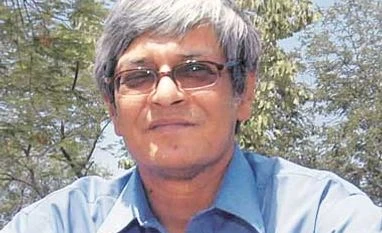 "The merger is like a divorce, property needs to be separated: Bibek Debroy")











