Trade normalisation dialogue will continue: Khurram Dastagir Khan
Interview with Minister of Commerce & textiles, Pakistan
Nayanima Basu New Delhi
In his first visit to India as Pakistan's new commerce and textiles minister,
Khurram Dastagir Khan talks to Nayanima Basu on liberalising trade through the Attari-Wagah border and continuation of the dialogue after India’s general elections. Edited excerpts:
India is in election mode now. If Narendra Modi becomes Prime Minister and a Bharatiya Janata Party government comes in, do you think the trade dialogue will continue? We have no apprehensions that the dialogue will be stopped if this happens. We respect the Indian people’s choice and will continue the dialogue of trade normalisation, irrespective of which government comes in. We will deal with it.
India has been asking for allowing more goods through the Wagah-Attari border. When can we expect it? Commerce secretaries of the two countries are discussing this matter as we speak. I am hopeful we might be able to do it by next month, with India reducing the sensitive list by 30 per cent. We would like to see more items of Pakistan's export interest to be removed from the list.
Before leaving for India, you said three Pakistani banks are planning to set up branches here. What is the progress? Yes. The State Bank of Pakistan (their central bank) has written a letter to the Reserve Bank of India to allow three banks to establish a banking network here. These are National Bank of Pakistan, United Bank and Muslim Commercial Bank Ltd.
What about the relaxed business visa regime agreement? Pakistan is yet to implement it. Well it has to be implemented by both sides. We want the visa agreement to be revisited. The new agreement is very exhaustive and has stiff guidelines, restricting the number of cities to be visited, time period and police reporting. This is making it difficult for small and medium enterprises to enter the Indian market. We have been facilitating the requirements on our own. But we want India to implement it seriously and sincerely.
It seems Pakistan is again reluctant on giving the 'Most Favoured Nation' (MFN) trade status to India. You are now giving it another nomenclature. We’re now officially calling it 'Non-discriminatory Market Access' or NDMA. This will happen soon. But before that, we have to create a level playing field and give unimpaired market access to each other. It is not just about tariff rate quotas or World Trade Organization rules. It is also about a framework on which trade can take place. Trade cannot happen in vacuum. We want resumption of the composite dialogue because it is not just trade but also investment. One incident at the border and the entire process gets derailed. There has to be predictability and stability.

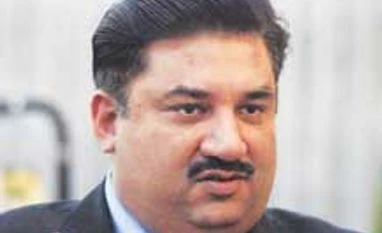 "Trade normalisation dialogue will continue: Khurram Dastagir Khan")


 Connect with us on WhatsApp