
UP tops with highest number women workforce
While the proportion of women in India's total workorce rose from 34% to 37% between 2000 and 2005, it declined thereafter to reach 27% in 2014
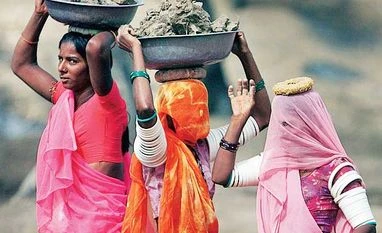 "UP tops with highest number women workforce")
WebinarsNew
Deep DiveNew
Explore Business Standard
While the proportion of women in India's total workorce rose from 34% to 37% between 2000 and 2005, it declined thereafter to reach 27% in 2014
Uttar Pradesh has the highest number of rural and urban women workforce at 13.6 million and 2.4 million respectively.
Associated Chambers of Commerce and Industry of India (Assocham) along with Thought Arbitrage Research Institute (Tari) had conducted a study titled 'Female Labour Force Participation in India' analysing India's performance in female labour force participation (FLFP) in comparison to the rest of the world.
The study presented state-wise analysis of FLFP in four states viz. Andhra Pradesh, Himachal Pradesh, Madhya Pradesh and Uttar Pradesh selected on non-arbitrary criteria with special focus on UP, since it is India's most populous state.
The study found although there was a spurt in the number of working women in India during 2000-2005, increasing from 34 per cent of the total workforce to 37 per cent, the FLFP rate had declined thereafter and reached 27 per cent in 2014.
The gap between rural male and female labour force participation in India in 2011 stood at 30 per cent, while in urban centres the gap was more pronounced (about 40 per cent). This could be attributed to social and cultural curtailment and lack of work opportunities.
It was highlighted that in India, marriage decreases the probability of female labour force participation by about 8 per cent in rural areas and more than twice as much in urban areas.
"UP has the highest 67.5 percent of self-employed women in urban areas among the states selected for study. However, UP has the largest gap between urban and rural workers as well," Assocham general secretary D S Rawat said while releasing the study.
Of 3.317 million women employed in micro, small and medium enterprises (MSMEs) across India, UP employed over 2,00,000.
UP has the highest absolute number of workers, both male and female viz. 49.85 million and 15.97 million respectively. However, it accounted for the largest gender gap of about 33.88 million.
Rawat said although UP had taken several initiatives, more was needed to improve health, education, training and skill building and spread awareness among women about the importance of FLFP. This could make UP achieve higher, thereby contributing to India's pursuit to gender parity and higher growth, he added.
Initiatives like Beti Bachao Beti Padhao, Make in India, Start-up India and others were a positive step in the direction to improving female labour force participation in India, noted the study.
More initiatives towards women's empowerment were needed to creating an enabling environment for increasing female employment and entrepreneurship.
The study suggested promoting skills training for women, creating employment opportunities, setting up child care centres, ensuring women safety and security in every sphere through concerted efforts of the central and state governments to boost female labour force participation.
First Published: May 31 2016 | 5:16 PM IST


 Connect with us on WhatsApp