Investments, it seems, have revived in the economy. Evidence of this is that gross fixed capital formation is officially estimated to grow 12.2 per cent in 2018-19, the highest since Narendra Modi became prime minister.
Also, its share in gross domestic product (GDP) is set to rise by 29.5 per cent in the year, the secondhighest in this government, showed the advance estimates for 2018-19. However, deeper analysis shows that investments are not driven by the private sector, but governments, particularly states.
CARE Ratings Chief Economist Madan Sabnavis said private sector investment had not picked up. Had it been investing significantly, its source of funds would have thrown up some hint, he said. For instance, private placements of corporate bonds saw the least number of issuances and the second-lowest amount of fund raising during April- November 2018-19. As many as 1,486 such papers were issued during the period, mopping up Rs 2.9 trillion.
The least amount was raised in the corresponding period of 2014-15, the first year of the National Democratic Alliance (NDA) government, at Rs 2.2 trillion, showed the data released by the Securities and Exchange Board of India (Sebi). Another set of data reveals almost the same story. Bank credit to industry rose at a muted pace of 0.3 per cent as of November 23, 2018, compared to March 30, 2018. The rate was, though, positive against a contraction of 2.8 per cent during almost the corresponding period of 2017, according to the data released by the Reserve Bank of India. In services, however, there seems to be some kind of growth as bank credit rose 9.9 per cent against a fall of 2.3 per cent over this period, the data showed.
However, much of the growth in this area is coming from trade and non-banking finance companies (NBFCs). While capex is not much in the retail segments, NBFCs may not have invested in long-term projects, Sabnavis said. CRISIL Chief Economist D K Joshi said there were signs of investments picking up in the private sector in segments such as auto and renewable energy. However, investments are mainly pushed up by state governments, he said.
The Centre’s capex recorded a contraction of 33 per cent in November year-on-year. Growth was muted at 4 per cent in the first eight months of the current financial year, said ICRA Principal Economist Aditi Nayar. Capital expenditure by all states is now almost twice that of the Centre.
Of the total general government capital expenditure of Rs 8.75 trillion budgeted for in 2018-19, state governments account for roughly two-thirds. Even then, the Centre's capex proceeded with subdued pace, it is driving investments in highways, roads and Railways, said SBI group Chief Economist Soumya Kanti Ghosh. Besides, housing, particularly affordable ones jacking up investments. India Ratings Chief Economist Devendra Pant also said there were some signs of investments in the private sector.
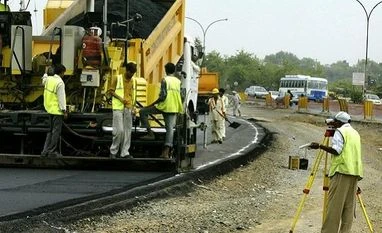
However, investments are mainly driven by the state governments, he said. Even though investments by the Centre is bit muted, investments are being made in roads, housing and other infrastructure sectors, he said. In FY19, 5,759 km of highways have been constructed till November against 4,942 km during the corresponding period last year. Projects for 6,407 km road length have been awarded under the Bharatmala Pariyojana till the end of October 2018.
The two projects of Peripheral Expressways around Delhi, comprising 135 km Eastern Peripheral Expressway (EPE), and 135 km Western Peripheral Expressway (WPE) connecting NH-1 and NH-2 from Western and Eastern side of Delhi was completed this year and inaugurated in May 2018 and November 2018 respectively. So far 95 affordable housing projects have been approved in 2018, according to data by Knight Frank. Also Deen Dayal Jan Awas Yojana has been launched in Haryana which aims at converting unorganised colonies into organised ones.
Also the government has been offering subsidies to the buyer to create a favourable environment for the real estate market in the state. According to ANAROCK data, as many as 22,120 new units were launched in the affordable category (less than Rs 40 lakh) in Q2 2018 across the top seven cities. Affordable housing units comprised a massive 46 per cent of the total new supply in the same quarter. If we break these numbers down further, then nearly 6,530 units were launched in the price bracket less than Rs 20 lakh, and the remaining between Rs 20 lakh and Rs 40 lakh. (With inputs from Karan Choudhury and Megha Manchanda)