Infosys board on Friday was all praise for the outgoing CEO for the services rendered. We differ in our assessment.
Though Vishal Sikka delivered better than the industry results, he misled small investors and didn’t measure up to the largest group of shareholders – the erstwhile promoters who collectively still hold 12.75 per cent in the company.
Let me come straight to the point. On the parameters of per-employee revenue and per-employee Ebita, Infosys did better than the industry. So he delivered on that front. The employee morale was also high. There was a fall in employee attrition from 22.9 per cent in 2014 to 18.7 per cent in 2016, but it started rising again and was 21 per cent in the latest quarter.
Then in April 2015 he talked of an aspirational target. He said that Infosys would be a $20-billion company by 2020 with solid 30 per cent margins. That meant a CAGR of 18 per cent when the company itself was growing at 6 per cent in dollar terms. Common small investors who bought the stock feel cheated as the company has underperformed the NSE Nifty. It struggles to even get into a double-digit growth rate, leave alone the aimed 18 per cent.
With Infosys sitting on cash reserves of Rs 33,000 crore, money would never have been an issue for takeovers. But large acquisitions hardly happened, and when one did, it was mired in controversies. So, promoters asking questions about the separation package for the CFO became an issue.
Sikka’s allegation that he was continuously being distracted does not wash as he had a long enough honeymoon period to make his mark and the promoters started questioning only 20 months into his tenure.
And those questions were not misplaced. They emerged straight out of corporate governance and investor expectations.
Why aren’t you distributing cash through dividends and buybacks if you are not investing in buying businesses?
It would be in place to remind the Infosys board that American investor, Carl Icahn bought just 0.92 per cent of Apple shares between August 2013 and January 2014 and forced the board to buy back $14 billion of its own stock.
Another hedge fund investor Daniele Loeb with just 6 per cent stake in Yahoo! forced the board to throw out CEO Scott Thompson in 2012.
Investors outside India are assertive. Indian investors are still feeling sorry and defensive for asking for their due rights.
Small investors should thank promoters led by N R Narayana Murthy for the buyback that will happen now and the 74 per cent payout that the board was forced to give as a guidance.
So boards ought to listen to shareholders. If they don’t, they need to make way for people who do. V K Sharma is head, Private Client Group, HDFC Securities
Read this article for free
Register to continue reading premium journalism and analysis from Business Standard.

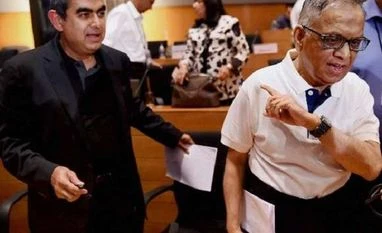 "Vishal Sikka's Infosys exit: Boards must listen to shareholders or make way")












 Connect with us on WhatsApp