We didn't want Inspector Raj with dual-control situation: Amit Mitra
Interview with Finance minister, West Bengal
Dilasha SethArup Roychoudhury West Bengal Finance Minister
Amit Mitra said on Friday that the decision to exempt those with annual turnover of less than Rs 20 lakh would protect the interest of smaller traders. Speaking to reporters after the GST Council meeting in New Delhi, Mitra also said that by agreeing to state control below the threshold of Rs 1.5 crore, an Inspector Raj situation was avoided. Excerpts:
The GST Council decided on exemptions for turnover below Rs 10 lakh per annum for north-eastern and hilly states, and Rs 20 lakh for the rest of the country. What is the thinking behind it? This is a big relief. We were able to protect the interest of small traders, small manufacturers and laying out of initial path of GST (goods and services tax). There is wide variation among states on the current VAT (value-added tax) threshold. The GST Council agreed at Rs 20 lakh threshold, which means any dealer who has a turnover of less than Rs 20 lakh will not be part of the tax net. This gives a huge relief to small businesses of India and West Bengal. In West Bengal, a total of 138,000 business will not be paying tax out of a total pool of 265,000. The VAT limit currently varies from state to state. For West Bengal, the limit is currently Rs 10 lakh; for Uttar Pradesh it is Rs 5 lakh; and it is only Rs 1 lakh in northeastern states.
The issue of dual control seems to have been resolved. But, there was also a compromise from states in that the Centre will continue to assess 1.1 million service-taxpayers. States have prevailed in dual control. We are charging VAT and sales tax and we continue with that. I'm very pleased that the Union government has accepted Rs 1.5 crore. This shows cooperative federalism.
We’ve protected the core group with whom we work today. Above Rs 1.5 crore turnover, there is already dual control. We will logically define a way to have mutually acceptable method for control. Below Rs 1.5 crore, you should not have control. These businesses should not face audit by both the Centre and states. We did not want Inspector Raj. Only states would be involved in working with taxpayers like small traders and shop keepers. Small manufacturers will not face dual control in GST.
On service tax, only the Centre levies the tax currently and so it is felt that this levy should go to it only for the initial period. Once state officials are trained, it would go to states.
What further deliberations took place today? Rules for GST have been set in motion and compensation to states have also been defined. For compensating states, three alternatives have been discussed. First, a state can be compensated if the revenue under GST falls short of the average tax earnings in the best three years out of the past five years. Second, of the five years, two outliers are left out and the average is taken. If the revenue under GST is short of this, then states get compensated. Third, a base year can be fixed and a particular growth rate decided for all states. If the revenue falls short of that, then the state gets compensated.
The base year for calculating compensation has been agreed as 2015-16 and an average of five years will be taken. If for some reasons the base year becomes 2016-17, then the average would be taken for six years. These three ideas will be discussed by the officers and the GST Council will take a call.

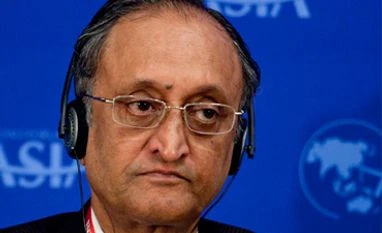 "We didn't want Inspector Raj with dual-control situation: Amit Mitra")


 Connect with us on WhatsApp