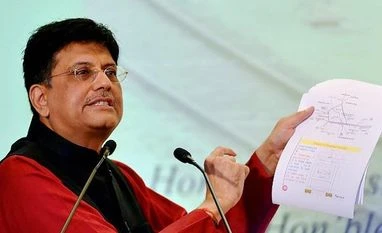
When Union railway minister Piyush Goyal talks about complete electrification of railway traction, he is saying something which no railway has done in the world. Even in Europe, which is predominantly electric traction for reasons of cheap power available, around 20 per cent continues to be diesel.
Union finance minister Arun Jaitley, who has been laying down the roadmap for Indian Railways since last year as well, emphasised on electrification in his February 1 Budget speech. “We are moving fast towards optimal electrification of railway network. Four thousand kilometers are targeted for commissioning during 2017-18,” said Jaitley.
The budget speech came as no surprise since Goyal has been talking about electrification of railway ever since he took office as railway minister last year. Even after the GE controversy, that erupted within days of his taking over, settled down, Goyal on November 22, 2017 told a gathering at FICCI, “We have planned to switch all trains to electric-driven in the next five years.” Diesel locomotives will be used for back-up purposes in the yards, according to the minister.
Since Goyal has been minister of state for power and still takes keen interest in the electricity sector, his penchant for electrification is understandable. But this emphasis has now been challenged by Bibek Debroy, chairman, Economic Advisory Committee of Prime Minister. Debroy had earlier chaired a committee on railways. Though the committee did not dwell much on electrification, it acknowledged the fund crunch faced by the national transporter and how its resources are thinly spread over various projects including those for electrification.
Goyal, however, says the Railways is spending Rs 160 billion every year on diesel and moving to electricity will save it Rs 80-100 billion. The railways consume 17.5 billion units of electricity. In 2015-16, its electricity bill stood at Rs 110 billion, and dropped to Rs 90 billion in 2016-17. The average per-unit cost dropped from Rs 6.75 a unit in 2015-16 to about Rs 6 in 2016-17.
This argument can be countered by the fact that it is the taxation structure which makes diesel expensive even during the low oil price scenario. The Indian Railways roughly consumes 2.8 billion litres of diesel a year for which it pays roughly Rs 69 billion in tax to state and central governments.
Besides, electrification, comes with a cost. Out of the total network of 66,687 route kilometre (RKM), only 30,012 RKM is electrified. According to a roadmap chalked out by the Railway Board last year, the Railways would electrify at least 22,400 RKM by 2020-21. In the last four years, Rs 171.65 billion has been spend on electrifying 16,815 RKM. Electrifying low traffic routes is, therefore, not financially prudent.
Railway experts say electrification for high-speed passenger services is understandable but in the US, for instance, where freight business dominates rail system, diesel continues to be the main traction. On electrified routes, moving double-stack containers is difficult though there have been some pilots done by the Railways. There is no pressing need, therefore, for the financially-starved Railways to electrify.
Read this article for free
Register to continue reading premium journalism and analysis from Business Standard.

 "Why full electrification may be a case of bad economics for Indian Railways")











