With no major fiscal support, govt's growth measures seen falling short

Sitharaman ignored the auto industry's demand for a reduction of a goods-and-services tax on vehicles to halt the worst slump in car sales in almost two decades
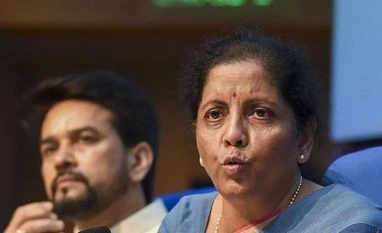
Finance Minister Nirmala Sitharaman
Finance Minister Nirmala Sitharaman and MoS for Finance Anurag Thakur | File photo: PTI
Anirban Nag | Bloomberg
3 min read Last Updated : Aug 26 2019 | 8:29 AM IST
India’s steps to boost financial market sentiment and support businesses could fall short of shoring up growth in Asia’s third-largest economy.

Finance Minister Nirmala Sitharaman announced a number of measures on Friday to help re-ignite an economy that’s slowed sharply on the back of weak consumption and a deteriorating global environment. However, she didn’t outline any major fiscal support -- as businesses had been calling for -- focusing instead on steps to spur foreign funds and lending.

Economists, finance leaders, industry executives and local media raised questions about the effectiveness of the measures, which included scrapping a tax on foreign funds, allowing concessions on vehicle purchases and hastening infusion of an already announced 700 billion rupees ($9.8 billion) of capital in state-run banks.

“These are short-term palliatives,” said Priyanka Kishore, head of India and Southeast Asia economics at Oxford Economics in Singapore. “What India needs is structural reforms to take growth to above 7 per cent.”

Consumers have cut spending in India as they turn more pessimistic about jobs amid a slowdown in growth to a five-year low. 
Data due this week is likely to show the economy expanded 5.7 per cent in the quarter ended June, below the 5.8 per cent pace seen in the previous three months.

The withdrawal of the additional tax on foreign portfolio investors may help to spur sentiment in the equity markets. Overseas investors pulled out more than $3 billion from the nation’s stock and bond markets since July.

But businesses had been hoping for more.

The “crisis is not because of decline in ease of doing business or sops for automakers,” Thomas Isaac, the finance minister of the southern Indian state of Kerala, said via Twitter. “Bank recapitalization had already been announced. What is required is a large fiscal spending package.”


Sitharaman, who last month narrowed the budget deficit target for the current fiscal year to 3.3 per cent of GDP from 3.4 per cent, ignored the auto industry’s demand for a reduction of a goods-and-services tax on vehicles to halt the worst slump in car sales in almost two decades.

“Moderation of GST base rate from 28 per cent to 18 per cent for all categories as being requested by the auto industry for sometime now would have been the real demand stimulant,” said Rohit Suri, president and managing director of Jaguar Land Rover India Ltd.

The lack of a fiscal response puts the burden on the Reserve Bank of India to continue with its stimulus. Governor Shaktikanta Das has already cut interest rates to the lowest in nine years.

Top Finance Ministry officials have shown reluctance for stronger measures. Krishnamurthy Subramanian, the ministry’s chief economic adviser, said government intervention for the private sector presents a “moral hazard.”


The Times of India newspaper said in an editorial that while Sitharaman’s plan was a start, the government needs to do more work to address larger problems of structural deficiencies, which have lowered the nation’s growth potential. The finance minister said Friday that more measures are in the offing to support the economy and an announcement may be made again this week.

“Announcements from the finance minister have potential to boost short-term sentiment,” said Prayesh Jain, executive vice president at YES Securities India Ltd. in Mumbai. “But ground realities of weak economic environment needs to change for a tectonic shift in demand.”

One subscription. Two world-class reads.

Already subscribed? Log in

Subscribe to read the full story →
*Subscribe to Business Standard digital and get complimentary access to The New York Times

Smart Quarterly

₹900

3 Months

₹300/Month

SAVE 25%

Smart Essential

₹2,700

1 Year

₹225/Month

SAVE 46%
*Complimentary New York Times access for the 2nd year will be given after 12 months

Super Saver

₹3,900

2 Years

₹162/Month

Subscribe

Renews automatically, cancel anytime

Here’s what’s included in our digital subscription plans

Exclusive premium stories online

  • Over 30 premium stories daily, handpicked by our editors

Complimentary Access to The New York Times

  • News, Games, Cooking, Audio, Wirecutter & The Athletic

Business Standard Epaper

  • Digital replica of our daily newspaper — with options to read, save, and share

Curated Newsletters

  • Insights on markets, finance, politics, tech, and more delivered to your inbox

Market Analysis & Investment Insights

  • In-depth market analysis & insights with access to The Smart Investor

Archives

  • Repository of articles and publications dating back to 1997

Ad-free Reading

  • Uninterrupted reading experience with no advertisements

Seamless Access Across All Devices

  • Access Business Standard across devices — mobile, tablet, or PC, via web or app

Topics :Nirmala SitharamanIndian EconomyEconomic slowdown

Next Story



