World's confidence in India growing due to reform agenda: Andrew Robb
Interview with Minister for trade & investment, Australia
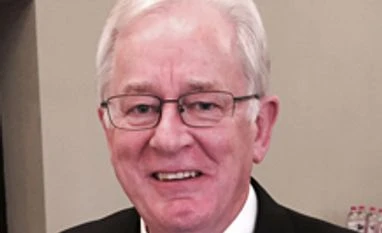
Sanjay Jog Mumbai India and Australia have put the negotiations on the comprehensive economic cooperation agreement (CECA), or free trade agreement (FTA), on a fast-track. However, both the countries are struggling to reach a consensus on issues relating to tariff, market access and preservation of competitive positions. In an interview with Sanjay Jog, visiting Australian minister for trade and investment Andrew Robb explains how there is a confidence globally in India. Edited excerpts.
India and Australia just concluded seventh round of talks on CCEA. What is the present status?
Two prime ministers have agreed that it should be comprehensive, high quality and should be completed by 2015-end. We are making good progress.
Indian businesses want issues to be cleaned up by Australia to do the business. Australian businesses want similar action by the Indian government. A comprehensive economic cooperation agreement with Australia poses no threat to the Indian domestic market. Australia has shown its commitment to free trade for decades and most recently concluded agreements with Japan, Korea and China.
What are the issues on which both the countries differ?
Origin is a typical issue in every agreement, which can be resolved. It cannot be an obstacle. There is a trade in goods, a lot of tariff. There is investment and services. We will have and had negotiations on tariff issues.
There is an absolute priority on how to transfer Australian expertise to India to help unlock great (Indian) potential. That's what Prime Minister Narendra Modi wanted. He wanted an access to Australian expertise in a whole lot of different service areas such as health care, education, engineering, financial, architecture and design because we have got world class services. Australia is not a big economy but we have got wonderful skill training services.
Prime Minister Modi sees us having a role in training. We can try and make a big contribution and add value. However, it is a matter of concern that there are less than 200 Australian businesses, which are more in trading. But in Dubai alone, there are 350 Australian companies. We are in every major economy. But we have to create an agreement which removes the roadblocks.
What are those roadblocks and barriers which India needs to remove quickly?
Tendering for major government contracts is one of the major roadblocks. It needs to be fixed. For example, an air construction company cannot tender for highways.
Then, there is a taxation issue. Often some tax treaties signed by India with countries put Australia at disadvantage. Therefore, we are looking for getting an equal treatment. This is not only from India alone but Australia will need to give similar treatment to India.
Modi is focusing on Make in India with a thrust on manufacturing. How Australia can be part of this campaign?
We are a high-cost economy and therefore cannot compete, especially in assembly projects. Our three car manufacturing companies will leave Australia by 2017. However, Australia can contribute in high-end manufacturing services in India as we do it elsewhere. We are in a position to bring them here to share that expertise. The access to Australian expertise will play a major role to unlock great potential in India.
Against this backdrop, falling two-way trade between two countries is a matter of deep concern?
Australia sells a lot of mining products. The quantity has not come off but the value of trade, especially due to falling prices, is in cyclical downturn. We want to see that two-way trade further grows in the areas of resources, energy, mining, logistics and distribution.
After Modi took over, there are a lot of reforms in mining. Our best companies can play a major role in the now-opened mining sector.
How the Modi government's reform agenda will help expedite conclusion of talks on FTA?
There has been a remarkable impact, especially in terms of world confidence in India due to various steps taken by the Modi government. Confidence is a big factor. Things are happening. There have been de-regulations, cost being taken out of system and the red tape is being removed so that proper market is being established. I am here for the third time in the last seven months. Companies are putting big commercial propositions, as India is on its way.
Can you tell when Australia can commence uranium supply to India?
I cannot give you an exact date. India and Australia have signed government-to-government agreement but there are certain technical requirements. The Australian treaty committee has finished the process as required under the law. One or two tracking issues are there, but we are not far away.
What is the update on Adani project as there is local opposition to the project?
Adani is proposing to develop the North Galilee Basin Rail Project (NGBR) to transport coal from the Galilee Basin to the Port of Abbot Point. It is worth $16 billion. A lot of opposition is from people who are opposed to fossil fuel not just coal but gas also. Adani is looking to develop huge coal deposits, the biggest in the Australian history.
People opposing the project are making false and ridiculous claims. The Conservative government at the federal level and state government are fully supporting the Adani project. There is a bipartisan support to that project.

 "World's confidence in India growing due to reform agenda: Andrew Robb")


