Pvt colleges to study legality of quota move amid fears of dip in quality

Institutions also fear that the admission process will become more cumbersome
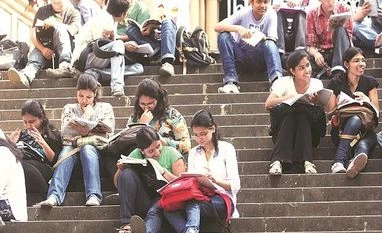
college, students, admission
Vinay UmarjiSamreen AhmadGireesh BabuArnab Dutta Ahmedabad/Bengaluru/Chennai/New Delhi
Last Updated : Jan 11 2019 | 12:40 AM IST
Banking on the Supreme Court rulings on reservations in the past, private aided- and non-aided higher education institutions intend to weigh the legality of the Centre’s move to push for a 10 per cent quota for the economically weaker among the general category. 

On Wednesday, the central government presented the Constitution (One Hundred and Twenty Fourth Amendment) Bill, 2019, in the Rajya Sabha that provides reservation for economically weaker students among the general category, in higher educational institutions including private institutions, after the same was cleared in the Lok Sabha. The Rajya Sabha also passed it. It will become a law as soon as President Ram Nath Kovind signs it, and does not need ratification by state legislatures, ministers had said.

On their part, private colleges fear implementation of the 10 per cent quota could make the process of admissions more cumbersome, with the onus of conducting due diligence around financial backgrounds of candidates falling on them. “While this may not impact institutions in terms of fee revenue as there is no mention of the same in the draft, it could affect the intake quality. We believe private institutions should not be forced into this. Rather, the focus of the government should be on job creation. Any method other than merit in education will backfire. Nevertheless, we will weigh in the legality and Constitutional validity of the move,” said H Chaturvedi, Director of Birla Institute of Management Technology (Bimtech) and alternate president of Education Promotion Society for India (EPSI), a body of B-schools in the country.

Some institutions are still in a wait-and-watch mode over how the move turns out. “It is too early to comment on the issue, but the move will definitely benefit students in the general merit category who are economically backward,” said K N Subramanya, Principal of RV College of Engineering, Bengaluru.

However, a representative of another higher education body, speaking on the condition of anonymity, said it would make representations to the government on the same, and may even challenge it legally.

“There is a need to take a relook at the whole issue of reservation. More and more of the top talent could move out of the country if they don't get admissions due to reservations. The move completely curtails meritocracy in higher education," the representative told Business Standard.

Private colleges fear it could also lead to backdoor entries for non-eligible candidates to gain admissions in top institutions.

“Currently, when the Common Admission Test (CAT) is taken, financial background of candidates is initially not sought. But now, entrance exams will have to seek this input as well. Moreover, the onus of conducting due diligence, to ensure only eligible candidates are admitted under reservation, will fall on private institutions,” said Sanjay Padode, Secretary, Centre for Developmental Education, IFIM Institutions.
Private colleges in southern India, however, do not expect any impact of the 10 per cent reservation on institutions. According to sources from a couple of top private institutions, who spoke on the condition of anonymity, implementation of the move will be at the discretion of the respective states. 
In particular, Tamil Nadu already has 69 per cent quota, including 19 per cent to SCs and STs. One has to wait for the state government to implement the fresh quota, to see what impact it would have on aided colleges. If the government accommodates the reservation for the poor among the upper castes within the existing quota, it will not have any impact on these colleges, said an expert from another unaided private institution.

Meanwhile, as far as private schools are concerned, they might look into options such as adding seats wherever possible, or cutting down seats for general category students, said Amol Arora, vice-chairman and managing director of Shemrock & Shemford Group of Schools, which has a network of 625 schools in India.

“However, it is not clear who will take care of the additional cost. We are awaiting clarity from the government, as to what extent they will be subsidising the fees and what percentage of the fee will be paid by these students. Without any of them, we may have to recover the additional cost by increasing fees of general students like in case of RTE. This, in turn, will put additional burden on general category students, which may increase the chances of them leaving,” Arora added.

One subscription. Two world-class reads.

Already subscribed? Log in

Subscribe to read the full story →
*Subscribe to Business Standard digital and get complimentary access to The New York Times

Smart Quarterly

₹900

3 Months

₹300/Month

SAVE 25%

Smart Essential

₹2,700

1 Year

₹225/Month

SAVE 46%
*Complimentary New York Times access for the 2nd year will be given after 12 months

Super Saver

₹3,900

2 Years

₹162/Month

Subscribe

Renews automatically, cancel anytime

Here’s what’s included in our digital subscription plans

Exclusive premium stories online

  • Over 30 premium stories daily, handpicked by our editors

Complimentary Access to The New York Times

  • News, Games, Cooking, Audio, Wirecutter & The Athletic

Business Standard Epaper

  • Digital replica of our daily newspaper — with options to read, save, and share

Curated Newsletters

  • Insights on markets, finance, politics, tech, and more delivered to your inbox

Market Analysis & Investment Insights

  • In-depth market analysis & insights with access to The Smart Investor

Archives

  • Repository of articles and publications dating back to 1997

Ad-free Reading

  • Uninterrupted reading experience with no advertisements

Seamless Access Across All Devices

  • Access Business Standard across devices — mobile, tablet, or PC, via web or app

Next Story



