Pamela Patsley, chairman and chief executive officer of Moneygram, the second largest payments firm in the world, is bullish about India, already the world’s top recipient of remittances, according to World Bank estimates. A strong agent network and better customer experience have helped Moneygram grow faster than competition and gain market share in India, she says. Patsley, rated by Fortune as one of the top paid women executives in the world in 2009, spoke to N Sundaresha Subramanian on business, innovation and regulations. Edited excerpts:
Can you briefly take us through your India business? We have very good presence. We have extended our relationship with India Post. India is the largest country in terms of receipts. We have been outgrowing the market growth, therefore gaining share. That’s our focus area. We are going to achieve that by providing consumers a strong value proposition and experience… and, blending those two in partnership with a strong and growing agent base.
Where does India figure in your scheme of things? A country like India is very unique and exciting for us. Indian diaspora has moved all over the world. Compare and contrast with the third largest receipts market, Mexico. It is so aligned to one country, that is, the US. Whereas for India, it is US, UK, GCC countries – there are about six of them — Australia, Malaysia, parts of Africa and Latin America. It is more analogous with China, which is the number two receipts country. We have to grow our business by aligning and attracting senders and at the same time marketing to the receivers.
How much of your business is from the US? Around 64-65 per cent originated in the US and that includes US-to-US. There are three different components. US-to-US is 31 per cent, US outbound accounts for about 33-34 per cent. Third component is business originated outside US. Australia, Malaysia, UK and Saudi. That is the fastest growing business. That is the newest part of Moneygram.
When did you start focusing on outside the US? Western Europe, we have been there for decades. We’ve been in Malaysia for years. But Malaysia with focus, I would say in the last five years. We can look at this from the perspective of largest sent markets and largest receipts markets. Largest sent is the US by a long shot. Number two is Saudi. We have only been in Saudi since summer of 2009. That is going very well. India is one of the largest recipients from Saudi. Number three is Russia in terms of number of remittances. Russia sends into former CIS (Commonwealth of Independent States). Our focus is going to be on these big markets and their receipts countries.
Can you share the revenue and other key numbers for your India business? We have not disclosed those numbers. We have talked about network growth and agent growth. We are present in about 45,000 locations. Besides India Post, we have SBI and Punjab National Bank and agencies like Muthoot and Manappuram, which have strong presence in the south. Bangladesh, Sri Lanka and Nepal — all these countries are important markets for us.
How many agents do you have in India? We have seven direct agents in India. Beyond that, we have our sub-agent network offering these services. We are continuing to build our network presence.
How are other emerging payment channels, such as kiosks, ATMs and online, doing? Alternative channels, including moneygramonline which accounts for five per cent of our business, are growing at a faster rate of 50 per cent. It is a very fast growing segment. Good for both the consumer and the agent. We will continue to focus on this.
Do you see virtual currencies, such as Bitcoin, as a threat to conventional payment systems? It is coming under some interesting regulatory scrutiny. I don’t see it displacing currency as we know it today.
Do you feel regulators are behind the curve in catching up with innovation?
Worldover… government and regulatory agencies have lagged the consumer desire. I wouldn’t imagine that new technology lags behind infrastructure, but such innovation has to have some practical utility.
Worldover, there is a move towards better KYC. Have you seen changes in your way of functioning? The regulatory environment worldover is not easy. I am not sure I can find any place in world regulatory environment, (which) is easy. All governments are keen to bring more cross-border remittances on a formal channel. The market is fragmented. As number two, we have a five per cent share. The informal channel has the largest share. From our side, we are continuing to invest in back office channels, programmes and training.
Do all these mean driving people to informal channels, where not too many questions are asked? It is driving people towards formal channels.
In which of these markets are regulations most conducive? As a company? We are in 197 countries. I am not sure I can get this exactly right.
Who is the best regulator? I am not going to go there… (laughs) Who is my favourite regulator? Ah ah… I am not going to go there. I love them all. How could I give you another answer? It is a global business but has to be executed locally.

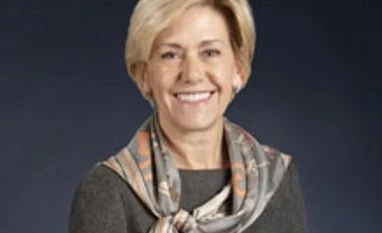 "Alternative payment channels growing faster: Pamela Patsley")


 Connect with us on WhatsApp