Scale is the first thing which strikes one about Blume Ventures.
In just two years of its existence, it has invested in 40 start-ups, raised a fund of Rs 100 crore, unlike any of the angel funds in India, from 40-50 investors. Just for comparison, Mumbai Angels has investment in 50 companies since it was founded in 2006.
The Mumbai-based seed-stage investor was the most active one in Indian start-ups during 2012, with 22 investments.
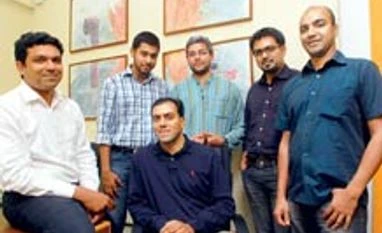
Founders Karthik Reddy and Sanjay Nath say their journey to such a start has been similar to a start-up's attempt to bootstrap its business. Nath feels one reason they have been able to scale Blume's portfolio is the startup mindset Blume itself has, being a start-up fund "we started investing even as we were raising funds," he added.
Nath feels one reason for the scale of portfolio that Blume has is also that they relate to start-ups better. "We started investing even as we were raising funds," he added. From the word go, the entire process, of raising funds to investment strategy, has been different. In Reddy's own words, "we could well be a case study someday".
Raising the corpus To raise its maiden fund of Rs 100 crore, Reddy and Nath made pitches to close to 300-400 investors in India, of which 55 helped them raise their target. This when neither had a great record of investment or managing a fund. Both have had similar backgrounds and met for the first time as members of Mumbai Angels, one of the country's first angel investing clubs. "Investors have backed us on the basis of their comfort with us as a team, hoping we will pull something off. They have bet on two individuals and the business model that will evolve. Raising money for a fund is like raising for 10 start-ups," said Reddy.
Both Nath and he attribute the pace of investment Blume has managed primarily because a good portion of the fund was raised domestically. "Investors have given us money as quasi-angels. We have also been able to create a referenceable ecosystem, like a 'a real life Linkedin' that our investors, advisors and mentors feel an integral part of" said Nath.
Much larger cheques have been signed by HNIs and family offices for funding than a usual cheque signed for an angel fund.
Strategy Unlike angel funds or seed investors that only start investing once they have managed to close 50 per cent to 80 per cent of the fund, Blume wrote its first cheque even before they had their own closing. "As a strategy, we have not shied away from being active investor. We have had our LPs (limited partners) warehouse the deals, as we were tracking companies even six months before the Fund was set up. Once we had our first $2 million, we started investing" added Reddy.
Of the Rs 100 crore raised, Blume has an investible capital of Rs 80 crore and of that, almost half has been invested across the 40 portfolio firms. As a strategy, Blume is never the sole investor in any of the investments made. It is either a lead investor or part of a syndicate deal. In cases where it is the lead investor, the invested amount can vary from Rs 50 lakh to Rs 1 crore and the stake could vary between 10 and20 per cent. In the case of syndication, wherein there is another angel fund or venture capital firm, Blume's investment size would be Rs 25-50 lakh and the stakeholding could be from three to 10 per cent.
Challenges The path it has started would help the Indian angel funding system to mature and evolve further. The idea is to give start-ups a platform where they can not only get funds but access the right connections and mentorship.
Success would be defined by how many of Blume's start-ups get to the next round of funding, especially from reputed larger VCs. Blume's 40 investments include 18 (in 2011) and 22 (in 2012). "A majority of the 2011 batch and a few of the 2012 batch are already ready for the next rounds. So that will be a criterion of success," said Reddy.
For Nath, the fact that entrepreneurs prefer to come to Blume as the first choice, as a seed or angel investor, shows it is being successful in strategy and focus. Blume is also trying to crack the way entrepreneurs look at businesses. "The quality of entrepreneurs is getting better. But they are yet to realise what it means to take a business from paper to say a $50-million value company. That needs to be worked on," said Reddy.
As with all early stage companies, both the founders are prepared for failures. They have built three scenarios for failure (and success) and feel that each has a third of a chance of failure. In the first case, the company goes bust and its a write-off. In the second case, the company returns at least amount of investment. And finally the third category - which they obviously aspire to the greatest - are the ones that hit massive (and often even global) scale. "The key is to see that if there are failures, they happen fast - so we can leave enough dry powder and go deeper in our 'winners'" added Nath.
At present, Blume does see a potential in two to three of its portfolio firms trending towards failure. But of the 40, two to three failures is not a bad ratio.
Still, failures do not keep Nath or Reddy awake. "It's the size of the problem that we have taken on and while it is exciting and idealistic, every scale issue is a problem and needs to be solved. The next fund that we night have would be bigger but we will not change the strategy," said Reddy.
"Many market observers say there is a lack of an early stage ecosystem in India. Yes, 'early stage is still early', but we feel we are sowing the seeds for a true platform that will help startups 'blume' (bloom)," said Nath.

 "Angel investing done differently")


 Connect with us on WhatsApp