
Panagariya makes a strong case for privatisation of PSBs, excluding SBI
On protest by farmers across the India, he favoured cash transfers to rural BPL households in times of crop failures via Aadhaar-linked bank accounts
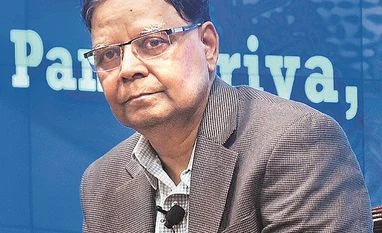 "Panagariya makes a strong case for privatisation of PSBs, excluding SBI")
WebinarsNew
Deep DiveNew
Explore Business Standard
On protest by farmers across the India, he favoured cash transfers to rural BPL households in times of crop failures via Aadhaar-linked bank accounts
Former NITI Aayog vice chairman Arvind Panagariya has made a strong case for privatisation of public sector banks with the exception of SBI, saying that political parties serious of forming government in 2019 should include the proposal in their manifesto.
Panagariya, who is currently a professor of economics at Columbia University, further said that predominance of scandals and NPAs in PSBs is only one albeit important reason for privatisation of PSBs.
"I firmly believe that privatisation of all PSBs except perhaps the State Bank of India should be on the election manifestos of all parties who wish to present themselves as serious candidates to form the government in 2019," he said in an interview to PTI.
Panagariya was replying to a query related to the recent banking frauds, including nearly Rs 130 billion at Punjab National Bank (PNB).
The eminent economist further argued that efficiency and productivity too demand that the government relinquish its control of the large number of banks whose market valuation has dwindled despite the fact that they hold the bulk of the deposits.
Panagariya noted that it is disingenuous to argue, as many advocates of PSBs do, that achieving social goals of lending requires two-dozen banks in the public sector.
"The fact of the matter is that private sector banks have often performed better than public sector banks in delivering on their priority-sector-lending obligations," he pointed out.
Asked to comment on recent trade tensions, with US President Donald Trump targeting India, Panagariya said that he would not hesitate to liberalise India's trade further rather than risk the United States closing its markets to Indian goods.
On Nobel laureate Paul Krugman's recent comment that India story could end with mass unemployment, the former NITI Aayog vice chairman admitted that Professor Krugman is surely right to point to the importance of manufacturing in the economic transformation of a developing country.
"I think manufacturing growth is essential for creating productive and well-paid jobs rather than escape mass unemployment," he said, adding that the economy is surely creating jobs.
"The problem we face is that it is creating very few jobs that fully exploit the potential of our workers," Panagariya insisted.
Talking about overall economy, he said that India remains stable in macroeconomic terms.
"The GDP growth rate has been on the rising trend during the latest two quarters for which we have datait rose from 5.7 per cent during the first quarter of 2017-18 to 6.5 per cent in the second quarter and 7.2 per cent in the third quarter. I expect the upward trend to continue," Panagariya asserted.
On protest by farmers across the India, the economist said he always favoured cash transfers to rural BPL households in times of crop failures via Aadhaar-linked bank accounts.
"In the medium run, the government strategy of raising farmer incomes through marketing reforms and increased farm productivity are right on target," Panagariya said.
First Published: Mar 25 2018 | 11:53 PM IST


 Connect with us on WhatsApp