Banks booking profits in bonds
It is expected the profits of banks in the fourth quarter will be driven by treasury gains
Neelasri Barman Mumbai Ahead of the end of this financial year, banks are booking profits in bonds. Due to this, bond yields continue to remain elevated, despite two rate cuts by the Reserve Bank of India (RBI) this quarter.
It is expected the profits of banks in the fourth quarter will be driven by treasury gains.
This year, the central bank has cut the policy rate twice — in January and March, by 50 basis points each. After both rate cuts, the bond market had rallied.
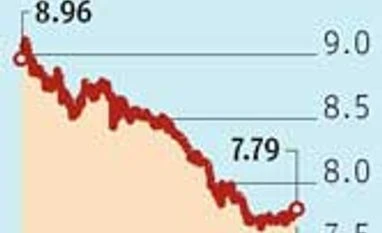
Since the beginning of this year, the yield on the 10-year benchmark bond has dropped by six basis points to 7.79 per cent. As of February 2, the yield stood at 7.65 per cent.
“Traders maintain very less positions in March. They are making whatever profits they can make. Now, the bond market is awaiting the outcome of a two-day meeting of the US Federal Reserve. If the Fed’s outlook is hawkish, chances are the yields will rise from current levels,” said Debendra Kumar Dash, associate vice-president (treasury), Development Credit Bank.
The Fed’s Federal Open Market Committee two-day policy meeting is to end Wednesday night. “The US Fed might remove the word ‘patient’; the market is already expecting this. Treasury gains will drive profits for most because in February, the yields had fallen significantly. Most banks would have taken advantage of that, which might have brought treasury gains for banks,” said N S Venkatesh, executive director and head of treasury at IDBI Bank.
Credit growth in the banking system was muted in 2013-14 but treasury gains had aided their earnings in the past few quarters. For the fortnight ended March 6, credit growth stood at 10 per cent year-on-year.
“Banks will be looking to increase their loan books and boost earnings; hence, treasury gains. Given the way the consumption story is playing out, fee-based income is expected to be somewhat flat. Fee-based income is not rising rapidly,” said Ramesh Rachuri, vice-president and head of fixed income at Peerless Funds Management Company.

 "Banks booking profits in bonds")


 Connect with us on WhatsApp