He may no longer be the US Federal Reserve chairman, but when Ben Bernanke speaks, the world still listens, carefully. On Tuesday evening, an auditorium packed with India's famous names listened with rapt attention when Bernanke took centre stage at Mumbai's Jamshed Bhaba Theatre and spoke on a broad range of issues, including the takeaways from the tumultuous economic events on his watch from 2006 till early this year.
Independence of the central bank is something clearly close to his heart. Asked for his advice to the next government about its relations with the Reserve Bank of India, Bernanke said he didn't know much about India's political dynamics, but what was critical for any country was that its central bank's independence be guarded. He was speaking at the second Kotak Presidium, a forum for global leaders to share ideas that shape the future.
"You have an excellent central bank governor in Raghuram Rajan, who has been my long-time colleague as an academician in the US. As the Indian economy matures, an independent and responsible central bank is really central to its success," he said. Bernanke, who has worked with both the Republican and Democratic governments as Fed chairman, said he was lucky as both President George W Bush and Barack Obama were strong defenders of the central bank's autonomy.
Asked about his views on inflation -targeting as a mandate for central banks, Bernanke said he supported it. The reason: Monetary policy benefits from clarity and transparency. But emerging economies should also be mindful of growth. An RBI panel headed by Deputy Governor Urjit Patel had recommended the RBI move away from discretionary policy to a rule-based monetary policy.
"But inflation targeting should not mean you should forget everything else. Central banks should also pay some attention to growth" Bernanke said.
Bernanke, who now works as a distinguished fellow in residence at the Brookings Institution, a Washington-based think-tank, also sought to remove the common perception that the US did not pay attention to the problems of emerging countries.
"Nothing could be farther from truth. When I was the chairman of Fed - and the same is true for the present chairman - we met with the central bank governors of emerging markets eight to ten times a year, either in the context of the Bank for International Settlement (BIS) or G20 or other meetings, where we explained the state of the US economy and listened to their feedback and discussed the issues threadbare," he said.
While the mandate of the Fed was to focus on controlling inflation in the US, Bernanke said his country also recognised that it was a part of the global system and financial instability anywhere affected the US as well.
He, however, criticised some emerging countries' tendency to draw an equivalence between exchange-rate management, which they did to promote exports, and monetary policy that as a side effect managed the exchange rate.
"The equivalence is not quite accurate. The difference is this: When exchange rates are managed in order to stimulate exports and if there is no change in the fiscal policy or monetary policy, exchange-rate interventions amount to diversion of demand (from the developed world to the developing world)," he said.
Pointing out that he was moderately optimistic on US economic growth, Bernanke said supportive fiscal policy, combined with strengthening consumer spending and a recovering housing market, would help buoy the economy.
"We have seen some progress. The effect of the financial crisis is waning; so household balance sheets are much stronger; consumer sentiment is up so consumers will be stronger. Lastly, the housing sector, which was a big part of the slowdown, is showing signs of recovery," he said, adding he, however, wished the recovery was faster.
Bernanke suggested the catastrophic economic challenges were largely a result of the US' regulatory system not responding to changes in the financial system. "The financial regulatory system that we had was created in the 1930s following the Great Depression," Bernanke said.
"But over the past 50 years the financial system has ramified and grown and expanded and become much more complicated." According to Bernanke, who studied the Great Depression extensively, the financial system has adapted since the more recent recession.
"Monetary policy has been changed in important ways," said Bernanke. He mentioned a new focus on financial stability, and new tools available to provide that stability. Still, he said there were new dangers, and stressed the importance of a view of the entire economy for regulatory efforts, especially from the Federal Reserve.
Bernanke defended the biggest and boldest decisions in his eight-year career as Fed chairman and said when Lehman Brothers was going bankrupt in late 2008, he and other Fed leaders never hesitated on whether they should try to save the bank, though they were unable to find a way to do so.
When asked about his particular legacy as chairman of the Federal Reserve, Bernanke focused on communication. "I think the Fed needs to be more open, and explain what it's doing," Bernanke said. He believes progress has been made in that regard. Secondly, he hoped global economies would benefit from the steps he had taken during his stint as Fed chairman.
Bernanke, who is working on a memoir, said he planned to do speaking engagements. He also appeared to be basking in the relative ease of a less-scrutinised life.

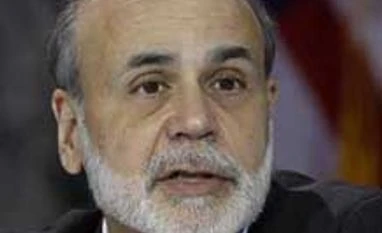 "Bernanke's message to new govt: Ensure RBI's autonomy")


 Connect with us on WhatsApp