Bond yields may remain elevated on Iraq crisis: Salil Saran
Interview with Managing director & chief executive, SBI DFHI Ltd
Neelasri BarmanAbhijit Lele Mumbai
Talk of the new government at the Centre taking hard decisions to improve India's fiscal health improved market sentiment and softened bond yields. However, as the markets were preparing for better days, a crisis broke out in Iraq, making many cautious. Amid this, yields could remain at elevated levels in the near term,
Salil Saran, managing director and chief executive of primary dealer SBI DFHI Ltd, tells Neelasri Barman and Abhijit Lele. Edited excerpts:
Do you think the crisis in Iraq will have a larger impact on Indian markets? Whenever there is a question on crude oil, it always has an impact on Indian markets. The equities market has seen an impact and in the government securities (G-Sec) market, too, there is some caution. It isn't clear how things will pan out in the near future. The news is refineries where the actual output takes place haven't been affected so far.
Also, there is news of oil-exporting countries increasing supplies in case of any shortage of crude oil. We will have to wait and watch.
What do you think is the near- term range for G-Sec yields? Foreign institutional investors (FIIs) are very risk-averse to anything relating to crude oil. There is a possibility of FIIs moving out. But nothing of that sort has happened so far. For the market, the next trigger is the Budget. In the past, the markets were gung-ho, due to the focus on elections. Yields on 10-year benchmark have fallen to 8.5 per cent levels. But with the Iraq crisis, yields had moved up. In the near term, the yield on the 10-year benchmark will be 8.6-8.73 per cent, depending on various issues such as crude prices.
Has the market factored in the payment of subsidy dues to oil companies? Yes, that has been factored in. The previous finance minister had, a number of times, said passing-over of subsidy bills in March was done in the past couple of years. This year, the government started with about Rs 1 lakh crore of surplus cash. That is healthy.
Are FIIs investing in long-term G-Secs, too? Among G-Secs, of the $30 billion, only $20 billion of short-term bonds has been taken. FIIs are investing more in the two-four-year papers, within the $20-billion limit. The $10-billion limit for long-term bonds hasn't been fully used.
Do you think food inflation will become a larger concern for the bond market? Food inflation has been an issue for a number of years. That is one of the primary reasons the Reserve Bank of India (RBI) is looking more at Consumer Price Index-based inflation. Food inflation will be looked at. For the rising prices of onions and potatoes, the government has already taken a few steps.
The intention to address food inflation is probably enough for it to be contained. I am fairly positive inflation will not be an issue unless the monsoon is deficient. As many are predicting the El Niño phenomenon by September, that might have an impact next year, not this year.
Last financial year wasn't really good for primary dealers. Do you expect this financial year to be better? This year was certainly better, till the Iraq crisis broke out. Currently, there are no issues, but we will have to wait and watch.
Do you see higher government borrowing this financial year? Personally, I do not think there will be an increase in government borrowings. The government might go for disinvestment of its stake in public sector undertakings. It is stressing on fiscal consolidation for the medium and long terms. So, it will try to stick to the borrowing numbers. Also, the government is going for rationalisation of subsidies and various schemes.
Earlier this month, RBI announced status quo on the policy rate; it adopted a dovish stance. Do you think the stance will change due to the Iraq crisis? RBI's stance will depend on how the develops. The RBI governor has indicated India is better placed to face external shocks. Currently, RBI does not see issues but its moves will depend on how things pan out.

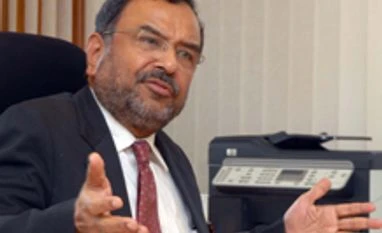 "Bond yields may remain elevated on Iraq crisis: Salil Saran")


 Connect with us on WhatsApp