Central Bank to raise upto 1,000 cr in equity via QIP in Q4, FPO next year

FPO to strengthen lender's capital adequacy, size will depend on success of QIP
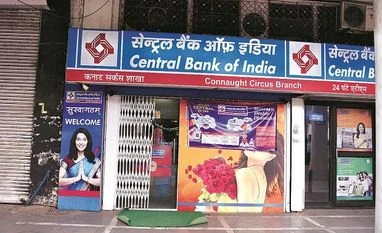
Central Bank of India
Abhijit Lele Mumbai
3 min read Last Updated : Nov 05 2019 | 2:42 AM IST
Public sector lender, Central Bank of India intends to raise up to Rs 1,000 crore in equity capital through Qualified Institutional Placement in the fourth quarter of the current financial year (Q4FY20). The Mumbai-based bank is also planning to float a follow on pubic offering next financial year (FY21) to strengthen capital adequacy.

Pallab Mahapatra, managing director and chief executive, Central Bank of India said bank has capital adequacy of over 12 per cent, above the regulatory requirement of 11.5 per cent.

The lender will approach the market to raise equity capital. "We have two options - raising equity by placing shares with institutional investors. This will be a qualified institutional placement (QIP) in the fourth quarter for equity capital amounting between Rs 500-1,000 crore," Mahapatra said.

The second option is to make a retail public offering. It will be a follow-on public offer (FPO) in the next financial year. The size of the offer will depend on the success of QIP, he added.

The capital adequacy will get strengthened through the Rs 213 crore raised via the Employee Share Purchase Scheme in the first quarter ended June 2019. The bank raised also Rs 500 crore through a tier-II bond offering in the second quarter ended September 2019. The continuation of profits and enhanced interest income, reduction in credit costs will help to maintain capital adequacy of 12 per cent, Mahapatra added.

The bank's capital adequacy ratio (CAR) as per Basel III stood at 12.69 per cent as of September 2019, of which, Tier I capital is at 10.34 per cent and Tier II at 2.35 per cent. Its net worth was Rs 19,747 crore as on Q2FY20. The bank's stock closed 2.3 per cent lower, at Rs 23.2 per share on the Bombay Stock Exchange today.

The lender is under the Prompt Corrective Action (PCA) regime of the Reserve Bank of India due to a high level of stressed assets and weak financial profile. It expects to exit the PCA regime by the end of the current financial year.

Central Bank's standalone net profit stood at Rs 134.07 crore this September. In the September quarter of the previous fiscal, there was a loss of Rs 923.60 crore.

Gross non-performing assets (NPAs) came down to 19.89 per cent (Rs 33,497.22 crore) of gross advances at the end of September 2019, from 21.48 per cent (Rs 37,410.76 crore) by the same period a year ago. Net NPAs also came down to 7.90 per cent (Rs 11,551.91 crore) from 10.36 per cent (Rs 15,794.15 crore).

One subscription. Two world-class reads.

Already subscribed? Log in

Subscribe to read the full story →
*Subscribe to Business Standard digital and get complimentary access to The New York Times

Smart Quarterly

₹900

3 Months

₹300/Month

SAVE 25%

Smart Essential

₹2,700

1 Year

₹225/Month

SAVE 46%
*Complimentary New York Times access for the 2nd year will be given after 12 months

Super Saver

₹3,900

2 Years

₹162/Month

Subscribe

Renews automatically, cancel anytime

Here’s what’s included in our digital subscription plans

Exclusive premium stories online

  • Over 30 premium stories daily, handpicked by our editors

Complimentary Access to The New York Times

  • News, Games, Cooking, Audio, Wirecutter & The Athletic

Business Standard Epaper

  • Digital replica of our daily newspaper — with options to read, save, and share

Curated Newsletters

  • Insights on markets, finance, politics, tech, and more delivered to your inbox

Market Analysis & Investment Insights

  • In-depth market analysis & insights with access to The Smart Investor

Archives

  • Repository of articles and publications dating back to 1997

Ad-free Reading

  • Uninterrupted reading experience with no advertisements

Seamless Access Across All Devices

  • Access Business Standard across devices — mobile, tablet, or PC, via web or app

Topics :Central Bank of IndiaCentral bank

Next Story


