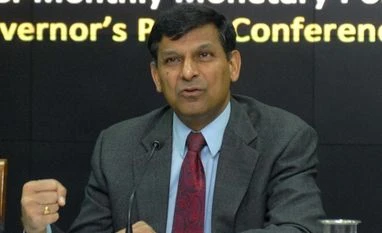
Reserve Bank of India (RBI) Governor Raghuram Rajan has asked firms to not apply for a payments bank licence only because it is a valuable property. The central bank had earlier, too, cautioned that they incur a significant cost in assessing the applicants and so firms should apply only if they are completely committed.
“Don’t just go in for licence because it’s a valuable property to have but instead do the due diligence on your own. And when you apply, it should be with the intent of fully carrying out,” Rajan said. The RBI governor said the central bank was “not overtly perturbed” that a few firms have decided to drop their payments bank plans after they were granted an in-principle licence last year.
“We are not overly perturbed that some people decided after analysis that they would not go forward. In fact it suggests that licencing has been adequately liberal and that we have a variety of players coming in,” he said.
Tech Mahindra, Cholamandalam Investment and Finance Co and a consortium of Dilip Shanghvi, IDFC Bank and Telenor Financial Services are the three players who have in the past couple of months announced that they would not be pursuing their plans to launch payments banks.
With this, now there are only eight players of the 11 which were approved by RBI to open these niche banks in order to further the regulator’s financial inclusion plans. These eight players are Reliance Industries, Aditya Birla Nuvo (Idea Cellular), Airtel, Vodafone, Department of Posts, FINO PayTech, National Securities Depository and Paytm.
Rajan said payments banks work particularly well for companies that have an existing base of operations and several contact points that can be leveraged upon. “The classic example is somebody affiliated with mobile company with many kiosks through which you can do cash in cash out.”
These payments banks are allowed to provide small savings accounts and payments/remittance services. They are also permitted to accept deposits of up to Rs 1 lakh but cannot lend or issue credit cards.

 "Due diligence must before applying for payments bank")


 Connect with us on WhatsApp