On Tuesday, the rupee dropped 1.2 per cent against the dollar. Before Tuesday’s trading session, the currency was the best performing Asian currency in 2021 and the only one to appreciate against the US dollar in the region despite rising dollar index and slower foreign portfolio investment.
To understand what happened on Tuesday, one needs to go back to a Reserve Bank of India circular a year back – March 27 to be precise – when banks were allowed to trade in off-shore non-convertible forward (NDF) rupee market.
“The offshore Indian Rupee (INR) derivative market - the Non-Deliverable Forward (NDF) market - has been growing rapidly in recent times. At present, Indian banks are not permitted to participate in this market, although the benefits of their participation in the NDF market have been widely recognised. The time is apposite to improve efficiency of price discovery,” RBI governor Shaktikanta Das said while announcing the move during the monetary policy of March 2020, which took place just after the imposition of nationwide lockdown.
An NDF is a foreign exchange derivative contract, which allows investors to trade in non-convertible currencies, with contract settlement in a convertible currency. NDFs trade principally beyond the borders of the currency’s home jurisdiction, enabling investors to transact outside the regulatory framework of the home market.
Participation by banks in India has grown by leaps and bounds in the last 12 months, with 12-14 banks being active in the NDF market.
“The fungibility between the offshore and onshore market has gone up significantly, it is like one market now. The offshore market has become extremely liquid,” said a currency analyst.
The rise in participation, coupled with the central bank’s forward intervention, has given a boost to carry trade. The central bank typically buys dollars from the spot market and sterilizes in the forward market. This has boosted forward premia and encouraged carry trade.
A currency carry trade involves borrowing a low-yielding currency in order to buy a higher yielding currency in an attempt to profit from the interest rate differential.
“If you have high forward premia, the carry trader is incentivized. He will come and short dollar. They are doing it synthetically. They are not owing actual dollar but shorting the forward. And that is immediately transmitting in the onshore market due to arbitrage,” the person said.
Dealers said the central bank interacted with treasury heads with large banks last week and when the discomfort with the appreciating rupee was conveyed some participants pointed out the issue of rising offshore market participants and the impact of carry trade. They said RBI was aware of the situation.
“The dollar-rupee levels are largely impacted by this carry trade which is synthetic and extremely hot money. And that the reason why rupee do so well this quarter despite FPI flows have come down substantially in February and March,” said a trader. In February and March (till Tuesday), FPI flows were $3.3 billion and $1.5 billion respectively, much lower than $9.7 billion in January and $8.5 billion in November.
The carry traders have now started unwinding, which resulted in rupee losing 1.2% on Tuesday. Bankers said a glimpse of what happens when carry traders unwind was seen on February 26 when the rupee fell 1.5% against the dollar. Tuesday’s fall was the steepest since then. The rupee had depreciated 2.3% against the dollar in 2020, and was the worst performer in the region, as the central bank was accumulating foreign exchange reserves.
“Some carry positions getting unwound amid easing of USD/INR forwards as there has been roll off of forward point for last day March over first day April, though this is again an annual year-end phenomenon and neither unusual nor too significant a reason for INR dip,” said Madhavi Arora, Lead Economist, Emkay Global Financial Services while adding rupee’s recent relative gains were expected to be transient and thus the reversal is not a surprise.

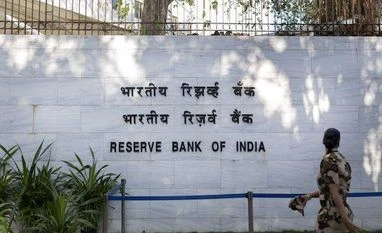 "Increased participation in NDF market a concern for RBI's forex management")












 Connect with us on WhatsApp