India needs 4-5 equally large banks: D Subbarao
Subbarao says paper on banking structure being readied; also stresses view that RBI must regulate banks & non-banking entities
BS Reporter Mumbai The Reserve Bank of India (RBI) feels there should be at least four or five large banks in the country to prevent monopolistic market power.
“Presently, (there is) significant skewness in the size of banks. The second largest bank in the system is almost one-third the size of the biggest bank. This creates a monopolistic situation,” D Subbarao, governor of RBI, said during his speech at the Ficci-IBA annual banking conference here on Tuesday.
State Bank of India (SBI), the country’s largest lender, is aiming to expand its size further, by absorbing its associate banks. It merged State Bank of Saurashtra with itself in 2008 and State Bank of Indore in 2010. And, plans to absorb one more associate bank in the current financial year.
“The task is to ensure that there are at least four to five banks of comparable size at all times, to ensure that consolidated banks do not acquire monopolistic market power, adopt predatory behaviour and force smaller banks into unviable models,” Subbarao said. However, he added, merely encouraging small banks without addressing the disadvantage of being small might not work.
“When small banks become successful, they naturally want to expand and grow. Should we allow a smooth transition from small to big? But if we do that, are not we defeating the very rationale for such banks – that they will be nimble and flexible and meet local demands?” he asked.
According to him, the country should also aspire to have a few Indian multinational banks in the near future, by selective acquisitions. Currently, SBI is ranked at 60 in the global league of large banks and it is likely to take years for Indian banks to achieve the status of a large global bank through organic growth. Subbarao said a discussion paper on an appropriate banking structure for India was in the final stages of preparation and would be issued soon.
On subsidiarisation of foreign banks in India, he said there were legal and tax-related issues needing to be resolved, in consultation with the government.
“RBI is still not clear whether we need an amendment to the law or we can resolve it among ourselves. We have been struggling with that issue over the last three months and, hopefully, we will reach a conclusion soon,” Subbarao said. Regulation ambit Subbarao believes RBI should regulate both banks and non-banks, a view not supported by the Financial Sector Legislative Reforms Commission (FSLRC).
FSLRC had recommended that the central bank eventually (within five to 10 years) focus on monetary policy and traditional central banking activity only, shedding all other regulatory and supervisory functions.
“One of the major causes of the 2008 financial crisis was that credit intermediation activities were conducted by non-banks (the so-called shadow banks), which were primarily outside the regulatory purview,” Subbarao said.
He said this had raised serious concerns on regulatory arbitrage and felt unified regulation by the same regulator was needed for financial stability.
“For monetary policy to be effective, credit creation (i.e. by banks and credit institutions like non-bank finance companies) should be regulated by the central bank,” he said. After the global financial crisis, he added, the trend had been to entrust more, not less, regulation to central banks.

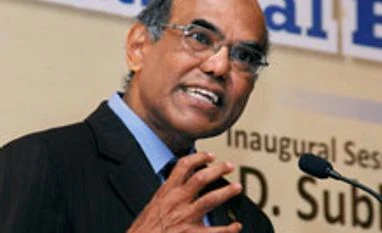 "India needs 4-5 equally large banks: D Subbarao")

