India's riskier rating in way of foreign banks' expansion: Rajan
He said greater demand on banks to hold capital in the post-financial crisis scenario has come at a cost
Press Trust of India London Foreign banks have stopped opening branches in India, as they need to set aside a lot more capital due to the country’s “higher risk” credit rating, and they feel it is “not worth” doing so, Reserve Bank of India Governor Raghuram Rajan has said.
In a lecture titled ‘Why Banks?’ as part of the Marshall Lecture 2015-16 series at Cambridge University on Tuesday, Rajan said greater demand on banks to hold capital in the post-financial crisis scenario has come at a cost.
He said: “It made sense after financial crisis to ask banks to hold more capital. But, one of the concerns bankers have been expressing, even if bankers might have low credibility because they have cried wolf too often, that eventually it will... create greater aversion to taking on risky lending.”
Rajan added, “We see some of that today. Certainly, as an emerging market central bank regulator, I see that foreign banks have stopped opening branches because our credit rating is BAA, which implies higher risk.”
India has been assigned lowest investment grade rating with a high risk profile by various global agencies.
Rajan likened the situation in India to that of small and medium enterprises in industrial countries, as in both scenarios, the central factor is that more growth is required.
“So, we need to ask ourselves, is more capital good or is it likely to impinge on activities banks do? There is a trade-off and this calls for more empirical work as to what the right level of capital is,” said the former chief economist of the International Monetary Fund.
Rajan used what is described as “matchstick theory” in an attempt to highlight why doing away with banks was not essentially a viable option to the largely student and academic audience of the two-day lecture series organised by the university’s Faculty of Economics.
He said: "There is a reason why banks operate. All these proposals to do away with banks, to my mind, will cause serious costs on the system, it will increase the cost of financing and therefore we have to be very careful.
"However, we do understand the consequences of systemic crises, they are severe, they are painful so more capital was warranted than what there was during the global financial crisis, but we have to be careful about going too far.

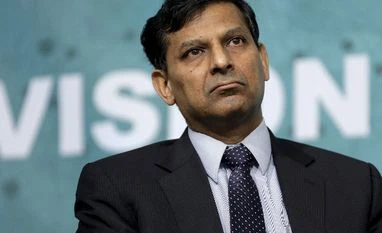 "India's riskier rating in way of foreign banks' expansion: Rajan")


