HSBC India’s head of global banking HITENDRA DAVE doesn’t see investment flows slowing down. Therefore, the chances of the rupee weakening could be less. In an interview with Niraj Bhatt and Anup Roy, Dave says companies are fast leaving banks for the bond market and banks will have to now find ways to tap other customers. Edited excerpts:
How is HSBC India doing and what is the perception of India among foreign investors?
There are challenges to the economy. One of the things in our favour is that India is being seen as a very attractive investment destination — both by real money, which is foreign direct investment (FDI), and by portfolio flows. We see significant interest from fixed income and equities, or even private equity money. We are very big in key global markets, and the bulk of the FDI is coming from there. We play a key role in marketing India as an investment destination. Globally, investment opportunities aren’t that many. India’s exchange rate, economy, polity seem to be stable. Now we should get our policies to be stable. However, the local demand for money is low. External commercial borrowing (ECB) funding, which has an end use in capex, has some headwinds. Overall, we are optimistic about our business in India.
What do you mean when you say policies have to be stable?
Whatever be the policy, it should be consistent. That would encourage people to think 10-, 15-, 20-year plans. Once you say a sector is opened up, let it remain opened up. If a company has signed a power purchase agreement, let it be honoured. You need that consistency for investment to come in. People will even live with bad rules as long as it is known on Day One.
What is your expectation on rates?
Ultimately, interest rate follows inflation and now you have a legislative mandate on inflation. All the factors that contribute to inflation have aligned, or are in the process of aligning favourably. In case of food inflation, farmers have responded splendidly. There is good administrative action by authorities, to step in early by permitting exports, or imports, building buffer stocks. In case of oil, prices are stable and the government now passes through everything. Natural forces of demand are working now. One negative side is that the mix of stalled projects and relatively muted consumption growth is resulting in lower employment growth. The informal sector is struggling to adjust between demonetisation and GST (the goods and services tax), resulting in low wage growth. I think inflation has structurally moved into a lower band and this rate-cutting cycle has more legs.
What do you think should be the policy priority of the government?
The priority for all policymakers has to be around putting more money in the pockets of the people. We have to increase income so that there is more consumption and that crowds in capex. The focus should be to increase disposable income, incentivise consumers to consume, to invest, and with that everything else should follow — interest rate policy, taxation policy, administrative policies. We are sitting right now at one of the nicest sweet spots for the country.
Is there any merit in letting the rupee depreciate to benefit exporters?
This is a very difficult issue. Because people who ask this question also believe in a free market. The number of dollars coming into the country is not going to come off, by the looks of it. The world is still significantly underinvested in our country. Most Fortune 500 companies think their investment is less in a country that is growing at 6-7 per cent. I am not sure if it is feasible to have a weak rupee, to say I will draw a line in the sand that rupee will not go stronger than this. How many dollars can you buy? The whole world is running a carry trade, whoever buys the dollar is doing a reverse of the carry trade. It has a big cost. My preference would be natural forces of market to play up, keep telling exporters and importers that this is now like interest rate. We don’t have a set bias, but keep preparing the market more and more for hedging. In 10 years, the currency has depreciated roughly 50 per cent. If an exporter has failed to get the benefit of this 50 per cent, would another five per cent help him?
What is your view on the big shift that is happening now from bank loans to bonds?
The way things are headed, I don’t think there will be any top-rated borrowers left on any bank balance sheet. It is a serious issue. Top-rated companies will use banks only for working capital, and that also can be raised from the commercial paper market. The best companies in India have access to domestic and international markets. The fact that you have so many housing finance companies and non-banking finance companies, especially consumer finance companies, is a testament to the failure of the banking industry to really identify and go after a fresh set of borrowers. Now the challenge is to go down the curve: If you can’t lend to the AAA companies, can you lend to the fellow who buys from or sells to the AAA company? Can I lend to the people who work in these AAA companies? Only those who cannot access the capital market will borrow from us. It could be certain sectors such as real estate, certain project finances, and some end-users.

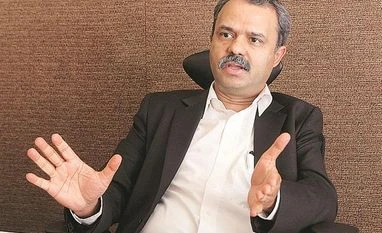 "It may not be feasible to have a weak rupee: HSBC India's Hitendra Dave")












 Connect with us on WhatsApp