Jury still out on giving bank licences to industrial houses: RBI official

Given that banking is a highly leveraged business dealing with public money, it makes sense to keep industry/business and banking separate, says RBI deputy governor M Rajeshwar Rao

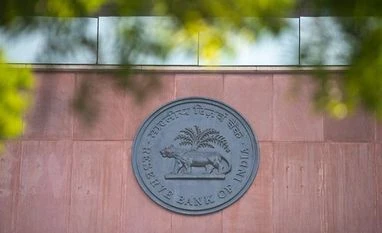
RBI, Reserve Bank of India
Photo: Shutterstock
Anup Roy Mumbai
3 min read Last Updated : Dec 16 2021 | 12:56 AM IST
Reserve Bank of India (RBI) deputy governor M Rajeshwar Rao on Wednesday defended the central bank’s decision of not allowing industrial houses to float banks, and said more deliberations are needed before RBI changes its stance on this issue agreed back in 2001.

An internal working group (IWG) of the RBI had recommended allowing industrial groups into banking, but late last month the RBI said it kept on hold the two recommendations of allowing industrial houses and large non-banks to float banks.

However, RBI had accepted 21 of the 33 recommendations of the group that submitted its report a year ago.

“Given that banking is a highly leveraged business dealing with public money, it makes sense to keep industry/business and banking separate,” Rao said in his speech on Wednesday.

“This separation is expected to avoid spillover risks - where trouble anywhere in the group entity may result in transferring risks on to the depositors, leading in turn to claims on deposit insurance with subsequent ripple effects cascading across the largely interconnected financial systems, creating concerns around financial stability.”

Besides, there are concerns around conflicts of interest through self-dealing at the expense of bank clients and in the transactions between the bank and its affiliates, favouring associates for extending loans and undermining the neutrality and independence in the functioning of the bank, by say, constricting the flow of credit to competitors, Rao added.

Concerns are also warranted around issues of connected lending, complex web of group structures, cross holding as well as presence of large number of unregulated entities in the group, “as these would stretch the RBI’s regulatory and supervisory resources”, said Rao.

“While it is an accepted fact that the relationship between financial economy and real economy is symbiotic, de facto merger of the segments may actually aggravate the systemic risks,” Rao said.

These issues have been flagged by the IWG also and therefore, the RBI deputy governor said “it is necessary that we closely examine the related matters before thinking of permitting large industrial houses or NBFCs owned by such houses to set up any new bank".

However, the deputy governor did not rule out giving licences to industrial houses completely. “Let me just say that the jury is still out on the issue,” Rao said.  

The deputy governor said technological and digital innovations have brought vast improvement in the banking space, but has also given rise to newer challenges for everybody.

Such innovations have increased the efficiency, productivity, and competitiveness in the delivery of financial services, furthered financial inclusion at a reduced cost of financial intermediation, but “such innovations have also given rise to newer challenges for all stakeholders”, Rao said.

“While customers face issues of mis-selling, data security and privacy as well as identity theft problems, regulators and supervisors need to increasingly engage with issues around customer protection, ethical conduct, regulatory arbitrage, and concerns about financial stability,” he added.

This has posed challenges for banks and other regulated entities as well as they “need to be on their toes to face up to everchanging competition and business disruptions through technology driven innovations, requiring them to fine-tune and sometimes alter their business plans, re-orient their strategies and manage the concomitant risks", said Rao

Here, the business conduct and governance issues in financial services firms are the “key soft pillars which build the edifice of a successful financial institution”, according to the RBI deputy governor.

RBI has given banking licences to further its financial inclusion agenda, while increasing competition, productivity and efficiency were also important reasons, the official said.

One subscription. Two world-class reads.

Already subscribed? Log in

Subscribe to read the full story →
*Subscribe to Business Standard digital and get complimentary access to The New York Times

Smart Quarterly

₹900

3 Months

₹300/Month

SAVE 25%

Smart Essential

₹2,700

1 Year

₹225/Month

SAVE 46%
*Complimentary New York Times access for the 2nd year will be given after 12 months

Super Saver

₹3,900

2 Years

₹162/Month

Subscribe

Renews automatically, cancel anytime

Here’s what’s included in our digital subscription plans

Exclusive premium stories online

  • Over 30 premium stories daily, handpicked by our editors

Complimentary Access to The New York Times

  • News, Games, Cooking, Audio, Wirecutter & The Athletic

Business Standard Epaper

  • Digital replica of our daily newspaper — with options to read, save, and share

Curated Newsletters

  • Insights on markets, finance, politics, tech, and more delivered to your inbox

Market Analysis & Investment Insights

  • In-depth market analysis & insights with access to The Smart Investor

Archives

  • Repository of articles and publications dating back to 1997

Ad-free Reading

  • Uninterrupted reading experience with no advertisements

Seamless Access Across All Devices

  • Access Business Standard across devices — mobile, tablet, or PC, via web or app

Topics :Reserve Bank of Indiabank licenceRBI

Next Story





