'Levels often deceptive': 5 reasons why India needs to up record forex pile

The reserve touched a record $608 billion last month due to RBI soaking up dollars.
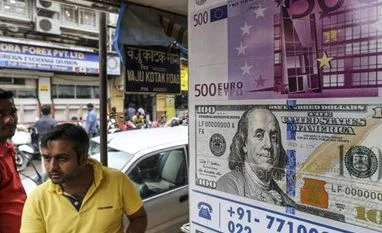
forex
Photo: Bloomberg
Anirban Nag | Bloomberg
4 min read Last Updated : Jul 02 2021 | 8:47 AM IST
The rise in India’s foreign exchange reserves to above $600 billion may not be enough to beat the challenges looming for Asia’s third-largest economy, according to some central bankers and economists.

The pile touched a record $608 billion last month, thanks mainly to the Reserve Bank of India soaking up dollars flowing in as foreign direct investments, as well as into the nation’s booming stock market. The hoard may help reassure investors and credit-rating companies about the government’s ability to meet its debt obligations despite a deteriorating fiscal outlook.

But the headline number hides some deficiencies, say analysts, including researchers at the central bank led by Deputy Governor Michael Patra. “Levels are often deceptive,” Patra and his colleagues at the RBI wrote in the latest central bank bulletin.

Here are five charts that show why India is vulnerable to external shocks despite the record reserves:


While the pile -- the fifth-largest in the world after China, Japan, Switzerland and Russia -- is enough to cover 15 months of imports, it’s well behind Switzerland’s reserves -- which can pay for 39 months of imports -- Japan’s 22 months and Russia’s 20 months, according to RBI researchers.

As the economy recovers from the pandemic’s second wave, demand for imports is likely to increase in coming months.


Although India’s foreign reserves are rising, the economy still has a net negative international investment position -- meaning foreigners hold more Indian assets than the nation holds foreign assets. The negative number is an imbalance that the central bank will want to fix, according to Radhika Rao, an economist with DBS Bank Ltd. in Singapore.

“This imbalance is likely to keep the central bank keen to further strengthen the buffer, also providing key ammunition to fight-off short-term volatility in global developments,” Rao said.


Nations that run chronic current-account deficits tend to rely on foreign equity and debt capital for their financing. While foreign short-term debt as a share of reserves has been steadily dropping, Indian policy makers often fret about the country’s exposure to external shocks.

Debt investments, especially those that chase high-yielding emerging assets like those from India, can shift suddenly and cause volatility in local asset markets, especially to the partially convertible rupee.


Foreign inflows have without doubt aided the nation’s reserves build-up. But the good times could soon end as the U.S. Federal Reserve prepares to withdraw some of its extraordinary monetary stimulus, potentially triggering outflows from emerging markets.

A recent working paper published by the Bank for International Settlements showed India is vulnerable to monetary tightening by the Fed, with outflows potentially impacting financial conditions and the economy at large. The paper showed that when the U.S. tightens monetary policy, financing conditions for Indian non-financial firms deteriorate as their net worth falls and access to credit worsens.

At the same time, a weakening rupee combined with higher U.S. interest rates leads to a downturn in both domestic credit and the business cycle, according to the BIS paper.


Reserves accretion is a priority for the central bank, Governor Shaktikanta Das said last month, citing the RBI’s efforts to stabilize financial-market and liquidity conditions so that monetary policy remains independent to “pursue national objectives.”

Analysts say Das’s comments imply the RBI is trying to manage the so-called “Impossible Trinity” -- maintaining monetary-policy independence, allowing a steady flow of foreign capital and keeping the currency stable -- by choosing to pursue an independent rates policy. That resolve is bound to be tested in the months ahead.

“The upcoming Fed taper and hiking cycle thereafter will test the defense,” DBS Bank’s Rao said.

One subscription. Two world-class reads.

Already subscribed? Log in

Subscribe to read the full story →
*Subscribe to Business Standard digital and get complimentary access to The New York Times

Smart Quarterly

₹900

3 Months

₹300/Month

SAVE 25%

Smart Essential

₹2,700

1 Year

₹225/Month

SAVE 46%
*Complimentary New York Times access for the 2nd year will be given after 12 months

Super Saver

₹3,900

2 Years

₹162/Month

Subscribe

Renews automatically, cancel anytime

Here’s what’s included in our digital subscription plans

Exclusive premium stories online

  • Over 30 premium stories daily, handpicked by our editors

Complimentary Access to The New York Times

  • News, Games, Cooking, Audio, Wirecutter & The Athletic

Business Standard Epaper

  • Digital replica of our daily newspaper — with options to read, save, and share

Curated Newsletters

  • Insights on markets, finance, politics, tech, and more delivered to your inbox

Market Analysis & Investment Insights

  • In-depth market analysis & insights with access to The Smart Investor

Archives

  • Repository of articles and publications dating back to 1997

Ad-free Reading

  • Uninterrupted reading experience with no advertisements

Seamless Access Across All Devices

  • Access Business Standard across devices — mobile, tablet, or PC, via web or app

Topics :Foreign exchange reservesRBIimports

Next Story



