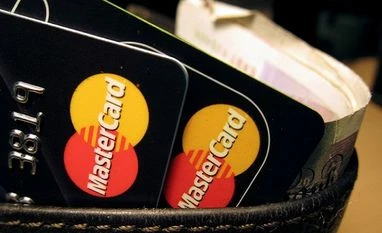
The Reserve Bank of India’s (RBI) ban on Mastercard is expected to hit customer acquisition of many banks, particularly those which issue credit and debit cards predominantly with Mastercard as the payment system operator, like Citi and RBL Bank. TATA Card – a co-branded credit card of SBI Cards and Tata Capital – only issues cards with Mastercard as the payment system operator.
On Wednesday, the banking regulator barred Mastercard Asia/Pacific Pte. Ltd. (Mastercard) from on-boarding new domestic customers (debit, credit or prepaid) onto its card network from July 22, 2021. The development comes after the payment system operator failed to comply with norms on storing payment system data locally.
In India, there were over 900 million debit cards as on May 31, 2021, of which over 400 million were issued by Mastercard, banking industry sources said. Credit card outstanding as on May 31, 2021, was over 62 million, latest data released by RBI showed. Credit cards are mostly issued with Mastercard and Visa – the former’s main competitor globally and in India – though public sector banks – who are not significant players in the credit card market – also issue home grown Rupay card of National Payments Corporation of India (NPCI).
Sources said that lenders like Citi and RBL Bank will be most impacted as these lenders issue cards mostly with Mastercard as the payment system operator. TATA Card, which is a co-branded card of SBI Card and Tata Capital, issues credit cards only with Mastercard. SBI Card had over 11 million cards as of May 31, 2021.
Citi has been issuing debit cards on the Mastercard platform for a long time. Citibank has 1.6 million debit cards in India.
While both Visa and Mastercard platforms were used on credit cards earlier, recently all the credit cards have been issued on the Mastercard platform. Citi had 2.6 million credit cards in India as of May 31, 2021.
In April this year, Citigroup decided to exit consumer banking business from 13 markets, including India. Though it has started slowing down its customer acquisition, it still has more than 4 million cards in the Indian market. The lender has been scouting for a buyer for its retail business ever since it decided to exit India.
Private sector lender, RBL Bank, which has grown the credit card business aggressively in the last few years, has issued cards mostly with Mastercard. RBL Bank has issued over 3 million credit cards and over 1.2 million debit cards. The old generation private sector bank, which went for a makeover under its MD & CEO Vishwavir Ahuja’s leadership, is among the top five credit card issuers in the country.
HDFC Bank is the market leader in the number of credit cards issued, as it has close to 15 million credit cards. SBI Card is at number two with over 11 million cards, followed by ICICI Bank with 10.8 million cards.
Country’s largest private sector lender HDFC Bank was barred from issuing credit cards in December 2020 by the RBI due to repeated outages in its internet and mobile banking platforms.
An email sent to Citi and RBL Bank remained unanswered till the time of publishing the story.
“While we are disappointed with the stance taken by the RBI in their communication dated July 14, we will continue to work with them to provide any additional details required to resolve their concerns,” Mastercard said in a late evening statement in response to the ban imposed by RBI while adding that the company has provided consistent updates and reports regarding its activities and compliance with the required stipulations since RBI’s directive requiring on-soil storage of domestic payment transaction data in 2018.
“It will be difficult for banks, which are heavily dependent on one payment system operator, to move into another operator immediately,” said a senior banker who spent nearly three decades in private and foreign banks. “Since the restrictions are effective from as early as July 22, new customer acquisition will be impacted,” the banker said.
Banking industry officials said while the public sector banks issue the credit card NPCI’s Rupay, private sector lenders prefer brands like Mastercard and Visa, particularly for their urban, semi urban customers.
“Customer choices in urban and semi urban areas clearly show a preference for Mastercard and Visa,” said another official from a private sector bank.
As far as credit card spends are concerned, they fell sharply in the months of April and May this year, as compared to the earlier three months of 2021, indicating the economic impact of the second wave of the Covid-19 pandemic.
RBI data shows credit card spends were Rs 59,409 crore in April and Rs 55,033 crore in May – which fell from Rs 72,689 crore in March. In January and February, credit card spends were above Rs 60,000 crore each month.