On balance, the right call: Sunil Kaushal
Rate rise was the right call as it is consistent with RBI's primary objective to curtail inflation
Business Standard Market pundits had expected an increase in interest rates in December 2013, but that did not happen. As a result, there was widespread belief that we were at the end of the hiking cycle. For Tuesday’s monetary policy, 95 per cent of economists thought the Reserve Bank of India (RBI) would maintain status quo but we had a rate rise! I think on balance this was the right call as it is consistent with RBI’s primary objective to curtail inflation.
Further, this is in line with the recommendations laid out in the Urjit Patel committee report on monetary policy, which has chosen inflation as the nominal anchor for the policy framework. The move would reinforce RBI's commitment to tame inflation, which remains elevated, albeit lower than that of the previous month and would in many ways be welcomed by the international investor community.
RBI has also offered direction to the markets by indicating further policy tightening in the near term is not anticipated if inflation trends down. We could in fact see lower rates if there is an established downward trend in inflation. Of course, there are arguments that inflation in India is large as a result of supply-side bottlenecks but to be fair, RBI has a limited role to play at the supply end. Further, sustained growth and exchange rate stability is a very difficult task in a high inflation environment.
There is also an external market factor, which perhaps influenced the increase in rates, given the recent volatility in the emerging market currency and stock markets, driven by concerns on Argentina, Turkey and China. We need to be watchful of these events as they unfold externally, as we all are well aware of the interconnectedness of the global markets. It appears RBI wants to steer the inflation numbers carefully and in calibrated steps. Visibility of an end-goal for inflation numbers is expected to anchor nominal inflation expectations.
The expectation is that slower growth and lower commodity prices, coupled with a relatively stable (India has outperformed other emerging market currencies in the recent months) currency and a good harvest, would cap the inflation and in turn result in lower rates in the coming months. But again, it is an expectation and in this volatile and dynamic world, there are no guarantees.
Sunil Kaushal, Regional CEO India & South Asia, Standard Chartered Bank

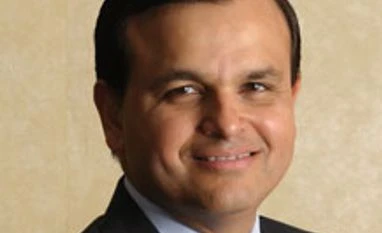 "On balance, the right call: Sunil Kaushal")


 Connect with us on WhatsApp