Justifying the decision of Tuesday to increase the repo rate by 25 basis points (bps), Reserve Bank of India (RBI) Governor Raghuram Rajan said the move was aimed at tamping inflationary pressures and not at tackling emerging market sell-off.
In a post monetary policy conference call on Wednesday, Rajan said: “Was the rate hikes taken to tackle the contagion because other central banks were raising rates and so on? No, I think for (some) time we have been saying very clearly that we are focused on preserving the value of the rupee. Preserving in the domestic context will preserve it in the international context. Preserving it in the domestic context means bringing inflation under control. Once we do that, investor confidence naturally follows. It was a decision which would have been taken whether or not there was financial markets turmoil in the last few days.”
Explaining the reason for the recent volatility in domestic market, Rajan said the sell-off was due to outflows from short-term funds.
On a question on the Turkish central bank’s raising interest rates, Rajan said Turkey-like policy action is hypothetical. “There are a number of investors who don't understand the details of India and treat emerging markets as a basket,” Rajan said.
Sometimes because India is doing better, Indian has more liquidity in certain markets. They take that signal to sell in the Indian markets when other markets are doing badly. I think what we have to do is just remain vigilant and not over-react to short-term events,” said Rajan.
Inflation targeting: According to Rajan, ultimately, inflation is both a monetary and a political issue. “We need the political establishment to understand the importance and I am confident it will and it is actually. We are not at this point inflation targeting. At this point what we have said is we want to bring inflation down and the Urjit Patel Committee gives us a glide path to bring inflation down. We examine the details of the Urjit Patel committee report, we will take up more issues. Some issues will have to be taken up with the government, some we ourselves can overcome,” said Rajan.
Debt-switch programme: Rajan assured the bond market once again that the Rs 50,000-crore debt-switch programme will be “conditional on stability in the market”. “Therefore, it is a very contingent policy,” he said.
Re-payment of oil swaps: Rajan also assured the Street that the re-payments for oil swaps that will come by end-March are well covered. “Between end-February and end-March, about 50 per cent of oil swaps will become due and beyond that another 50 per cent. At this point, I can say at least the re-payments for March are well covered,” he added.
Band for Consumer Price Index (CPI) inflation: RBI also defined a band on CPI inflation. “We first have to see what will happen by the end of this year on the CPI headline number. Whether we reach the target earlier or not, we may and that’s a good thing. We have a projection around eight per cent with a band of 7.5 per cent to 8.5 per cent,” said RBI deputy governor Urjit Patel. According to Patel, there is a fair bit of uncertainty and RBI feels the central estimate is achievable. “Regarding core inflation we have not made projections explicitly. We have some internal working numbers. The glide path is based on CPI headline,” added Patel.
Fall in core inflation: With headline inflation coming down, RBI believes core inflation will also fall. “Our belief is that as we bring down headline inflation, core will come down accordingly. But the reason we have talked about core CPI for sometime is precisely to demonstrate that it is not just food inflation, there are other aspects of inflation that has been picking up,” said Rajan.
Prices of services moving up: It is not just food prices which are going up, said Rajan. According to him, it is also the price of services which have been going up steadily over the past few years including services such as education, health care and housing. “If you can't stop food prices increasing, there can be spillover into more general inflation which is certainly in the realm of monetary policy. You have to push the government for increasing the supply side and also reduce the incentives or pressures on food prices,” he said. “To give up the pipe on inflation saying food is beyond our control, is overstating or understating the powers of the central bank.”
Deposit rates attuned to high level of inflation: According to Rajan, at this point, deposit rates are attuned to the high levels of inflation. “My hope is that the disinflationary process plays out and the policy rate will become once more central to the rate setting process.”
Central tendency is to bring CPI inflation at 8%: Rajan believes India is in an environment with high inflation and low growth due to which navigating in those circumstances has to be done with more care than in a situation where there is high inflation and high growth. “As of now, we don’t say the current policy will hit eight per cent on the nose; there is some volatility around that but the central tendency will be 8 per cent,” said Rajan.
Fiscal tightening:
A fiscal tightening plan on the cards, which will help control inflation, said Rajan.
Liquidity tightness driven by government balances:
According to Rajan, the key variable in the liquidity tightness in the market is driven by government balances. “We are not at a liberty to disclose government balances. But given those fluctuate as the government is trying to meet its fiscal targets, we are trying to offset that by liquidity infusion. Where the liquidity is temporary, we do term repos; where we need to accommodate more permanent liquidity needs to meet the overall credit growth of the economy, we do open market operations (OMOs).”
He added RBI is trying to keep the permanent liquidity accommodation consistent with its inflation control measures as well as the need to accommodate the legitimate credit expansion in the economy. “We are trying to make sure that the combination of the expansion of net foreign assets and net domestic assets is consistent with what we want the overall balance sheet to expand with over the year. But the key aspect that makes it hard for us to predict what we will do is really the fluctuating government balances,” he said.

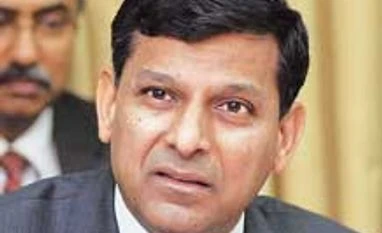 "Rate hike: Rajan says decision was not to tackle emerging market contagion")


 Connect with us on WhatsApp