Rates on hold but RBI MPC gets battle ready for economy as Omicron looms

Committee meeting kept policy stance accommodative as Jayanth Varma opposed, but the central bank later worked on raising money market rates through VRRR.
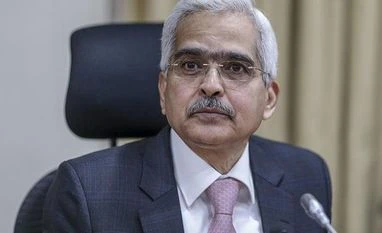
RBI Governor Shaktikanta Das
RBI Governor Shaktikanta Das | Photo: Bloomberg
Anup Roy Mumbai
4 min read Last Updated : Dec 23 2021 | 1:47 AM IST
Monetary policy committee (MPC) members feared rising inflation but felt that the momentum of growth recovery was not sufficient to merit policy tightening, show the minutes of the meeting released on Wednesday.

The six-member MPC, which announced its outcome on December 8, voted unanimously to keep the policy repo rate unchanged. However, external member Jayanth R Varma continued to vote against keeping the stance accommodative. The repo and the reverse repo rates remained unchanged at 4.00 per cent and 3.35 per cent, respectively, after the December 8 policy.

Governor Shaktikanta Das worried about the Indian economy facing “several headwinds emanating from global factors” — some old ones were getting prolonged while new ones were emerging. 

“While the Indian economy is on its way to achieve the projected growth of 9.5 per cent in 2021-22, there are still significant areas of concern,” the RBI governor said. 

Tax cut on fuel augurs well for the economy and should bring down inflation but revision in mobile tariff should put pressure on core inflation, Das said.

The inflation is expected to remain at 5 per cent in the second half, but the MPC must remain vigilant to “incipient cost-push pressures to inflation as well as to the uncertainty imparted by Omicron,” the RBI governor said.

Varma said the reverse repo rate must rise from 3.35 per cent.

“Raising effective money market rates quickly towards 4 per cent would demonstrate the MPC’s commitment to the inflation target, help anchor expectations, reduce risk premia, enhance macroeconomic stability, and allow lower long-term interest rates to be sustained for longer thereby aiding the economic recovery,” Varma said.

The central bank surprised the market by announcing a three-day variable reverse repo rate (VRRR) on Monday. Further, the central bank on Wednesday said it would conduct a four-day VRRR auction of Rs 2 trillion on Thursday.

However, the repo rate at 4 per cent corresponds to a negative real rate in the range of 1.0-1.5 per cent, which is “currently appropriate for reviving economic growth without excessive risk of an inflationary spiral,” Varma said.

The environment is “highly unsettled” and a status quo on rates and stance is “fait accompli”, said Deputy Governor Michael Patra. “Unless a clearer picture emerges on the near-term outlook, we must take guard and resume battle readiness again,” said Patra.

“Food inflation may ease with the usual winter softening, but core inflation will keep us awake,” said Patra. “India is being lashed by global spillovers,” mainly via the financial channel but the biggest risk remains the new Covid variant Omicron, the deputy governor said.

RBI’s Executive Director Mridul K Saggar cautioned that central banks, including the RBI, will need to confront the inflation challenge with “careful calibration and avoid impulses that may kindle or deepen stagflationary impulses”.

“Policy errors in either direction on the part of the central banks at this stage are laden with serious risks.”

“Small moves towards policy normalisation may be sufficient now and one can decide to shift to a tightening monetary policy cycle at a point when it is clear that demand revival has acquired resilience and pandemic risks to growth have diminished.”

External Member Ashima Goyal favoured the MPC “to remain steady and watchful through the next couple of months.” She welcomed reduction in liquidity, but the RBI must continue to push liquidity to stressed sectors.

External Member Shashanka Bhide said the economy has made significant progress in returning to the pre-pandemic level but “sustained improvement of this performance is critical”. “The high level of core inflation is a concern that affects both consumption expenditure and profitability of firms,” Bhide said.


One subscription. Two world-class reads.

Already subscribed? Log in

Subscribe to read the full story →
*Subscribe to Business Standard digital and get complimentary access to The New York Times

Smart Quarterly

₹900

3 Months

₹300/Month

SAVE 25%

Smart Essential

₹2,700

1 Year

₹225/Month

SAVE 46%
*Complimentary New York Times access for the 2nd year will be given after 12 months

Super Saver

₹3,900

2 Years

₹162/Month

Subscribe

Renews automatically, cancel anytime

Here’s what’s included in our digital subscription plans

Exclusive premium stories online

  • Over 30 premium stories daily, handpicked by our editors

Complimentary Access to The New York Times

  • News, Games, Cooking, Audio, Wirecutter & The Athletic

Business Standard Epaper

  • Digital replica of our daily newspaper — with options to read, save, and share

Curated Newsletters

  • Insights on markets, finance, politics, tech, and more delivered to your inbox

Market Analysis & Investment Insights

  • In-depth market analysis & insights with access to The Smart Investor

Archives

  • Repository of articles and publications dating back to 1997

Ad-free Reading

  • Uninterrupted reading experience with no advertisements

Seamless Access Across All Devices

  • Access Business Standard across devices — mobile, tablet, or PC, via web or app

Topics :RBI monetary policyMPCRBI

Next Story



