RBI chief has no Hamletian dilemma
Says year will see various initiatives taken forward; wants more innovative thinking from staff
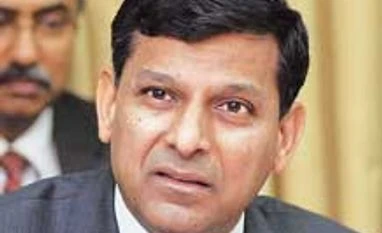
BS Reporter Mumbai Reserve Bank of India governor Raghuram Rajan said the central bank would continue working on its development effort, though people shouldn't assume an absence of risk in these.
In his New Year message to all central bank employees, he wrote: "There are risks involved in all new endeavours. We, of course, need to contain the risks but more important, need to remember that the greatest risk lies in inaction in the face of need."
The development efforts of Rajan are based on five pillars, as he describes it. These being strengthening of the monetary policy framework, new banks and new types of banks in addition to a subsidiary route for foreign banks, for the purpose of better regulation, deepening of financial markets, access of finance to small borrowers and a better mechanism to deal with corporate stress.
An RBI committee under the chairmanship of Urjit Patel, deputy governor in charge of monetary policy, is to review and strengthen the monetary policy framework. The committee is expected to give its report shortly. On providing access to small and marginal borrowers, a panel has been set by under Nachiket Mor, a board member of RBI. And, recently, a discussion paper has been issued on dealing with corporate stress, on mandating banks to identify such stress early.
Rajan, who took charge of RBI in September from D Subbarao, amid a currency crisis, appreciated his predecessor's role in steering the country through the global financial crisis.
"I have been singularly fortunate to have taken over from Dr D Subbarao, whose exceptional leadership put RBI in the forefront of policy action in combating the global financial crisis and also brought along a new ethos of public service into the central bank. Subbarao took charge in early September 2008, days before the collapse of Wall Street investment bank Lehman Brothers, which eventually led to a financial meltdown that affected several countries, including India."
Rajan also highlighted the need for an ability to adopt change in a world which is becoming much more dynamic. "We need to think out of the box to keep pace with today's environment. While making sure to preserve all that is good about our traditions, we do not want to change for change's sake," he said.
Finally, he assured fellow central bankers, that the code of ethics, namely 'ethics@work' that the RBI recently adopted for all employees, would go a long way in reinforcing existing values and inculcating a more ethical, self-governing internal culture.

 "RBI chief has no Hamletian dilemma")


 Connect with us on WhatsApp