
RBI may conduct OMO purchase to infuse liquidity into banking: Bankers
Under the OMOs, RBI buys certain government securities from the market, which thereby provides liquidity to the system
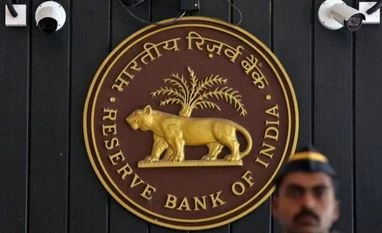 "RBI may conduct OMO purchase to infuse liquidity into banking: Bankers")
WebinarsNew
Deep DiveNew
Explore Business Standard
Under the OMOs, RBI buys certain government securities from the market, which thereby provides liquidity to the system
The Reserve Bank of India (RBI) is likely to conduct an open market operation (OMO) purchase this week to infuse liquidity into the banking system, which is further going to tighten on account of advance tax payments, say bankers.
The liquidity shortfall in the banking system at present, according to them, is pegged at Rs 500-600 billion, on account of intervention by the apex bank in the foreign exchange market to curb volatility in the rupee.
It is set to reduce further as companies will have to file their advance tax by September 15.
"Nearly Rs 500-600 billion of additional liquidity will go out of the system due to advance tax payments. RBI is expected to pump in liquidity into the system through OMOs this week," a treasurer of a state-run bank said.
Under the OMOs, RBI buys certain government securities from the market, which thereby provides liquidity to the system.
The size of this week's OMO buyback could be Rs 100 billion, the treasurer said.
"When RBI intervenes in the foreign exchange market, the rupee liquidity is being sucked out of the system. So to that extent, the RBI will pump in liquidity," said another banker.
The central bank has been intervening into the foreign exchange market to check rupee volatility, which touched a lifetime low of 72.11 against the US dollar in the intra-day trade Thursday. It closed at 71.73 Friday, after opening at 71.95.
Since April 13, the country's foreign exchange reserves have depleted by nearly $26 billion due to the RBI's intervention in the foreign exchange market.
The treasury head of a private sector bank said the OMOs will help cool off yield on 10-year benchmark government security, which is hovering above 8 per cent.
The yield on 10-year government bond rose on concerns that country's current account deficit (CAD) would widen as rupee is depreciating and on concerns inflation may go beyond the RBI's comfort zone.
According to Moody's, the country's CAD will widen to 2.5 per cent of the GDP in the current fiscal year due to higher oil prices that has been accentuated by rupee depreciation.
RBI has projected retail or consumer price based inflation (CPI) to be at 4.6 per cent in the second quarter of FY19, 4.8 per cent in the second half of FY19 and 5 per cent in the first quarter of FY20.
Bankers also expect the apex bank to raise repo rate by 25 basis points in the upcoming monetary policy review.
First Published: Sep 09 2018 | 11:40 AM IST

