Happy about getting a rate relief on home loans as soon as the Reserve Bank of India (RBI) cut the policy repo rate? Wait, first check with your bank if you are even eligible for the loan. Chances are that your eligibility has reduced by as much as a quarter.
The repo rate-linked home loan being offered by State Bank of India (SBI), the only bank to offer such a product so far, has brought down the eligibility criteria drastically for the initial years.
Interestingly, assuming the interest rate remaining unchanged, the absolute monthly outgo falls as income rises. The outgo is the highest when the customer’s income is low in the initial years, and is low when income is higher down the years. This is how the structure is right now, as being offered by the bank at 8.05 per cent, confirmed a senior SBI official.
Under the new structure, SBI has divided the principal amount of the loan by the tenure. So, for a Rs 30-lakh loan for 20 years, the yearly outgo on principal would be Rs 1,50,000 — substantially higher than the current system, where principal is much smaller, but the interest component higher.
Since interest is calculated on the principal outstanding, the initial years’ interest component will also be high. However, it may not be as high as the current structure because banks frontload the interest due while keeping the principal component low.
The net result is that the initial years’ outgo will be far higher under the repo-linked structure than what is being offered now, potentially leaving out a significant chunk of first-time customers from buying a property.
Since the principal is fixed, and interest fluctuates as soon as the repo rate is revised, there is no fixed and equated monthly instalment (EMI) concept. Rather, SBI and other banks will have to offer the loan product only to own customers so that the amount can be debited directly from the account by the bank.
The conservative approach of calculating eligibility is considering 60 per cent of net in-hand fund as loan servicing capability. Under the repo-linked loan format, this dips to less than 40 per cent since the first-year outgo would be much higher.
In simple words, if a borrower was considered creditworthy for an EMI of Rs 60,000 per month, the same customer would be considered for only Rs 40,000 EMI under the repo-linked structure, and thus the loan amount sanctioned would fall accordingly.
From October 1, all banks will have to shift to a repo-linked structure, as directed by the RBI. And if the SBI structure becomes the standard, then the housing for all scheme of the government would take a serious hit, bankers fear.
Keki Mistry, vice-chairman of Housing Development Finance Corp (HDFC), told a paper that the firm’s asset liability committee (ALCO) would consider linking lending rates to an external benchmark, but “only when we are able to match the same mechanism on our liabilities side”.
Others are also gearing up for similar products. Siddhartha Mohanty, MD and CEO of LIC Housing Finance, said his company was examining a proposal on linking lending rates to an external benchmark, and the ALCO would take a call on this.
“While taking the decision, we will have to take into account issues like cost of funds. The company will respond to the changes in the ecosystem,” Mohanty said.
A spokesperson of Indiabulls Housing Finance also said their ALCO would take a call on this issue in two weeks.
Private banks, however, are in a fix about the product. They cannot force a floating rate deposit product, but they are now forced to give a floating rate loan product.
“We don’t have the capital support like a government bank enjoys. So an asset liability mismatch can be dangerous,” said a senior banker with a large private bank. The banker also said SBI’s loan structure could not be replicated by others, and possibly even SBI would have to revise it, since it ran counter to the government’s intention.
SBI is already thinking on those lines. “This is not going to be the only option. Based on market feedback and regulatory requirements, we will review the scheme,” said the SBI official.

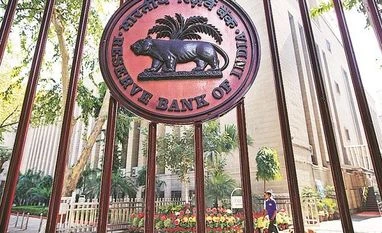 "Repo-linked loans: Home buyers to see higher outgo in initial years")












 Connect with us on WhatsApp