Rs 7 trillion of corporate papers downgraded since start of IL&FS fiasco

The IL&FS crisis in September led to panic in markets with liquidity quickly drying up for borrowers, whose business models relied heavily upon debt markets
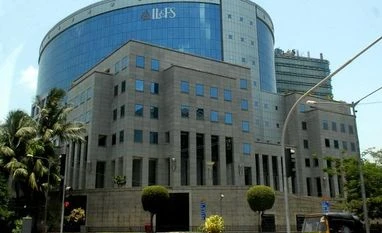
IL&FS
Jash Kriplani Mumbai
3 min read Last Updated : May 03 2019 | 7:39 AM IST
Mutual funds (MFs) and other lenders with an exposure to debt papers are feeling the heat as nearly Rs 7.5 trillion worth of corporate papers have been downgraded between September 2018 — when a series of defaults by IL&FS group companies began — and March 2019, according to data collated from the Securities and Exchange Board of India (Sebi).

This is four times the value of the downgraded papers in the previous seven months. However, it could not be ascertained whether the Sebi data adjusted multiple downgrades of the same security.

“There has been stress in large accounts in recent months, which has led to such large-sized downgrades,” said a fund manager requesting anonymity.

The ratio of average downgrades to upgrades for the past seven months is around two times, indicating two downgrades for every one upgrade.

Market participants say rating agencies have turned extra cautious after the IL&FS crisis put more regulatory and market spotlight on their functioning. 

"There is stress in various pockets of the debt market, and rating agencies don't want to get caught on the wrong foot again after the IL&FS episode. That is also the reason why the frequency of downgrades by rating agencies has gone up in the past few months," said another fund manager.

A recent note by CARE Ratings showed that the number of downgrades had exceeded the number of upgrades for the first time in six years at the rating agency.

The modified credit ratio (MCR) for CARE in 2018-2019 stood at 0.95; the last time the rating agency's MCR was this low was in 2012-2013, when the economy went through a turbulent phase amid global headwinds. An MCR of one indicates an equal number of upgrades and downgrades.

According to market participants, the flurry of downgrades is a major concern with large-sized exposures still stuck in various stressed segments.

In March, CARE Ratings downgraded Rs 1.13 trillion debt instruments and facilities of Dewan Housing Finance (DHFL), citing moderating financial flexibility, lower liquidity build-up, and stress in the non-banking financial companies (NBFCs).

More recently, there were multi-notch downgrades of the Anil Ambani group's financial arms — Reliance Home Finance and Reliance Commercial Finance — with Rs 35,000 crore of their debt instruments and facilities getting 'below investment grade' rating by CARE Ratings.    

Unlike banks, which have better capital to absorb bad debts, MF investors could face the brunt of such downgrades as fund houses have limited capital buffers to write-off bad loans, experts say. The data collated from Value Research and Morningstar shows that mutual funds accounted for more than Rs 20,000 crore of exposure in the four stressed groups -- Essel, DHFL, Anil Ambani group, and IL&FS -- that are facing concerns over the debt sitting on their books.

The IL&FS crisis led to panic in markets with liquidity quickly drying up for borrowers, whose business models relied heavily upon debt markets.

The immediate impact was felt in NBFCs as lenders including MFs started to worry over these entities' dependence on cheaper short-term money in the commercial paper market, while disbursing long-term loans on the other hand. These asset-liability mismatches prompted rating agencies to downgrade NBFCs, where they felt the strain could be larger.

One subscription. Two world-class reads.

Already subscribed? Log in

Subscribe to read the full story →
*Subscribe to Business Standard digital and get complimentary access to The New York Times

Smart Quarterly

₹900

3 Months

₹300/Month

SAVE 25%

Smart Essential

₹2,700

1 Year

₹225/Month

SAVE 46%
*Complimentary New York Times access for the 2nd year will be given after 12 months

Super Saver

₹3,900

2 Years

₹162/Month

Subscribe

Renews automatically, cancel anytime

Here’s what’s included in our digital subscription plans

Exclusive premium stories online

  • Over 30 premium stories daily, handpicked by our editors

Complimentary Access to The New York Times

  • News, Games, Cooking, Audio, Wirecutter & The Athletic

Business Standard Epaper

  • Digital replica of our daily newspaper — with options to read, save, and share

Curated Newsletters

  • Insights on markets, finance, politics, tech, and more delivered to your inbox

Market Analysis & Investment Insights

  • In-depth market analysis & insights with access to The Smart Investor

Archives

  • Repository of articles and publications dating back to 1997

Ad-free Reading

  • Uninterrupted reading experience with no advertisements

Seamless Access Across All Devices

  • Access Business Standard across devices — mobile, tablet, or PC, via web or app

Next Story



