
Second wave may worsen stressed assets in financial system: Rakesh Mohan
The second wave of COVID-19 may worsen stressed assets in the banking system, adding pressure on the financial stability, said former RBI deputy governor Rakesh Mohan.
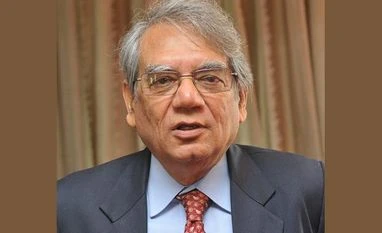 "Second wave may worsen stressed assets in financial system: Rakesh Mohan")
WebinarsNew
Deep DiveNew
Explore Business Standard
The second wave of COVID-19 may worsen stressed assets in the banking system, adding pressure on the financial stability, said former RBI deputy governor Rakesh Mohan.
The second wave of COVID-19 may worsen stressed assets in the banking system, adding pressure on the financial stability, said former RBI deputy governor Rakesh Mohan.
He said the Indian banking system has been reeling under the pressure of non-performing assets (NPAs) since 2015.
Various resolution measures including Insolvency and Bankruptcy Code were undertaken to bring down NPAs and then COVID-19 hit in 2020 impacting the growth process, he said during a virtual conference organised by India International Centre and Research & Information System for Developing Countries.
Mohan, who served as deputy governor of the Reserve Bank of India (RBI) twice between 2002 and 2009, said "we have more difficult task than other countries because we had a legacy of bad debt before COVID-19".
As per the Financial Stability Report of December 2020 by RBI, NPA could go up to 13.5 per cent in the later part of this year, he said, adding, "I would imagine that this would be worse because of the second wave...So this is a real challenge for RBI to maintain financial system's resilience."
According to a report titled 'The Response of the Reserve Bank of India to COVID-19: Do Whatever it Takes' authored by Mohan, despite all the measures implemented to promote the flow of credit to all segments of the market, credit growth has continued to be sluggish except for a significant increase to the SME sector.
"Hence there is a mismatch between the performance of the real sector and financial markets. This could potentially lead to enhanced stresses experienced by both lenders and borrowers, leading to potential financial instability," the report released earlier this week by the Centre for Social and Economic Progress said.
Thus, he said, financial stability challenges remain for the Indian financial system and its regulator in the months to come.
Mohan's views come days before RBI's release of bi-annual Financial Stability Report, which will give investors a clearer picture about the state of India's banking sector and the outlook.
RBI is slated to come out with the report towards the end of this month.
As per the Financial Stability Report, NPAs of the banking sector were projected to surge to 13.5 per cent of advances by September 2021, from 7.5 per cent in September 2020, under the baseline scenario.
The report had warned that if the macroeconomic environment worsens into a severe stress scenario, the NPA ratio may escalate to 14.8 per cent.
Earlier this year, another former deputy governor H R Khan had observed that non-performing assets (NPAs) or bad loans of public sector banks could cross 18 per cent if there is deterioration in economic activity due to the pandemic.
Mohan further said RBI has been very active before and after COVID-19 and has taken a number of actions to protect financial system from the ravages of the pandemic.
He expressed concern that the number of professionals at RBI in 2020-21 is lower than that in 2007-08.
Compared to any other significant country, he said, the number of professionals at RBI is really small.
There is a need to increase the number of professionals in the central bank in the light of expansion of financial system and transformation of financial space in the last 12-13 years, he observed.
(Only the headline and picture of this report may have been reworked by the Business Standard staff; the rest of the content is auto-generated from a syndicated feed.)
First Published: Jun 18 2021 | 7:38 PM IST


 Connect with us on WhatsApp