Promod Haque, senior managing partner at California-based Norwest Venture Partners (NVP), has more than 20 years' experience in the venture capital industry and invested in more than 60 companies, producing nearly $30 billion in exit values. In an interaction with
Sudipto Dey, Haque shares his insights on NVP's investment philosophy and hot tech trends to put your money on. Edited excerpts:
In 2012, NVP made 30-odd investments globally. Give us a sense of your investment philosophy. We are a multinational firm and we make investments in the US, Israel and India. We've also done some work in China. So it is very broad and across different sectors. In the US, a lot of stuff is going on in the security and infrastructure space in cloud-oriented companies, storage, medical IT and devices, e-commerce companies, and big data analytics, among others.
In India, the focus has been on sectors like e-commerce, the BFSI (banking, financial services and insurance) space, infrastructure and healthcare, and also little bit on IT in the product side. Out of the 30-odd investments we did last year, a few of them were from India such as Thyrocare, Manthan, and Capillary Technologies.
In any given time, we are managing close to $2-3 billion worth of capital. So that capital is invested in different companies that are in different stages of development in various countries.
In India, too, we look at early-stage, growth-stage and late-stage companies across different sectors - healthcare, IT, infrastructure, BFSI, etc. The investment philosophy at the end of the day is that we are looking for companies addressing growth markets. Not geographical growth markets, but sector growth markets. For instance, the reason we invested in FireEye was because internet security was a huge space where $20 billion are spent annually. So we look for large market opportunities, for products and services that are disruptive.
Has NVP consciously gone for an investment portfolio which is wide? The larger your fund gets, the more diversification strategy you have to use. So we look at our fund into three diversification vectors. First is geography - the US, India, China, Israel, etc. The second is - healthcare, infrastructure, e-commerce, software, etc. And the last is - from early state to late stage and growth. Sometimes, when you enter a company in a latter stage, the investment horizon is shorter. Typically, our investment horizon is between four and eight years. Then there are exceptions. Sometimes, you stay invested in a company for 10 years and in some cases, three.
How is your investment philosophy different from venture investment? What happens in many cases of venture investment is you put in some money initially, and then keep putting in (as the business gathers steam). Given the size of our fund, some of our venture investments end up being in the range of $20-30 million (over five-six years), while in some latter stage growth equity, the investment size is typically $50-60 million.
Despite India's rich entrepreneurial and tech talent, why has the country lagged in creating the ecosystem for start-ups? One reason why California is the Mecca of tech start-ups is that the US is early adopter of technology. It is highly industrialised and automated. So it is very natural for new technologies to find a home there. India is catching up slowly and so is China. But they are nowhere near the level of the sophistication that is in the US. In the near future, the US will be remain the early adopter of technologies, and a lot of innovation happens there.
How long will the lull in fresh fund raising for VC/PEs continue?
In general, in the US, fund-raising has been somewhat difficult for venture funds. The market size has been shrinking in terms of available dollars. A lot of that is due to lack of performance on part of some funds. If you have a good track record then it is not a problem, but there are some funds that have gone out of business. It all depends on your performance, which is typical of any industry. If there is less money available in the industry to invest collectively, then it, in a sense, is a good thing. If there is too much money available, then companies get funded that should not be funded. The last thing investors want is money getting wasted. Even it is bad for employees. Companies get started and then they close down in three years. It is also not good for customers who buy their products or service.
So what are the watch-out sectors in 2013 for you to put your money on?
At any given point of time, we keep looking out for sectors or growth areas in a sector, or new emerging themes. For now, security, big data analytics, healthcare IT, mobile and cloud are the big deals.
Has life changed as a VC/PE fund after 2008, given the liquidity concerns?
Not much. Cloud is a post 2008 phenomenon. So is big data analytics. There has been lot of innovation in mobile space since 2008. The SMEs taking to cloud through the SaaS (Software as a Service) model is a big event. SaaS is more cost effective and it allows SMEs to have sophisticated technologies without the skill sets to manage them.
How do you see SaaS impacting the business model of big boys of Indian IT?
Ten years from now, the kind of services that these companies do today will change. They will be doing more sophisticated IT than they do today. There will be less on-premise service, but more services based on cloud infrastructure. The cloud vendors may become their clients instead of individual companies.
Cloud is a delivery mechanism. Corporations will continue to consume technology. But use of technology will continue to go up as a per cent of GDP.
There is thinking in the government that if the PE is a sizable shareholder in a company going for public offer, it should be treated as a promoter. That could mean stricter disclosure norms and longer exit wait for the PE investor. How do you expect the industry to deal with this?
It all depends on where these companies list. A lot of these companies are now listing in the US, where the holding period is not onerous even for the promoters, leave aside the investors. The US market is more familiar with the new business models with more competitive data on how these companies get valued versus listing here in BSE, NSE or so on. So we are seeing a lot of these companies getting listed in the US. The US stock market is booming right now and there is lot of demand for these kind of growth stocks. So a lot of companies from China, India and Israel are starting to list in Nasdaq or NYSE. It will depend on the kind of company. For e-commerce and travel portal type of companies, there are already quite a few listed over there. So with comparable data, it is advantageous for these companies to list there.
Finally, NVP was one of the early-stage investors in travel portal Yatra way back in 2006. Would 2013 be the year for its long-expected IPO?
Yatra is doing well and growing nicely. We will see. Time will tell.

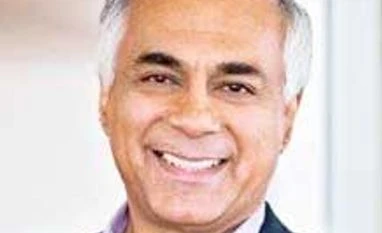 "The US will remain an early adopter of technologies: Promod Haque")


 Connect with us on WhatsApp