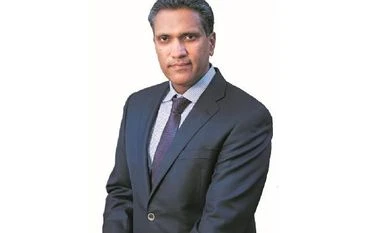
Two years after it acquired IDFC Alternatives’ private equity and realty businesses, Investcorp is betting big. Its private equity arm currently manages nearly $300 million locally, and hopes to ramp this up to $1.5 billion over time. Gaurav Sharma, Head of Investcorp’s private equity vertical in India, spelt out his stance in an e-mail interview with Raghu Mohan. Edited excerpts:
What is the big change in the private equity ecosystem after the pandemic?
The investment landscape was witnessing digitisation, and this gathered pace after the launch of Reliance Jio in 2016-17 — more so, after the pandemic. The investor appetite for tech-enabled digital-first businesses has proven to be extremely strong after Jio’s fund-raiser last year. There is a clear difference in terms of the themes that investors are focusing on now, when compared to the pre-pandemic phase.
Initially, we expected that after the first wave, there will be some slowdown in PE or foreign direct investments. But that's not happened. It is partly because the tech-enabled space continues to drive the interest of both international and domestic investors.
You did your first buyout with Unilog, which caters to the US market. How do you see this route shaping up?
The Unilog transaction aligns to our thesis that the export of low-cost Indian innovation is a proven model. Software-as-a-Service (SaaS) companies have really come of age. The US-headquartered Unilog is a niche company catering to an approximately $10-billion market (in the US). Using SaaS is one of the tools that all chief information officers and chief technology officers across companies are looking for, as they seek ways to increase efficiency to serve an increasingly digital audience.
This opportunity (the India-US route) is a very important one for us as an investment team. And we will continue to evaluate deals similar to Unilog. It is also an area where we stand out as well. We are a global PE shop. In fact, I would argue that it is one of the only truly global midmarket PE shops that operates out here. The fact that one of our largest PE offices is in New York really helped us in the case of Unilog.
Do you see large corporations showing more interest in the buyout of start-ups to fast-track their ambition?
We saw two big deals — RIL in NetMed and JustDial, and also that of Tatas with BigBasket. But they are not start-ups in the true sense, as these are businesses that had matured before; or been acquired. Take BigBasket, where the Tatas had an investment. It had a gross merchandise value of around $1 billion and, therefore, is not really a start-up.
Indian conglomerates and companies have realised the importance of both tech and tech-enabled businesses — be it the Tatas, or others. I think we will see a lot more of this happening, as these enterprises realise that there is a definite shift away from the traditional retail model of consumption to the more new-age, digital model of consumption.
Does this also imply that PE firms are relatively more confident, given the multiple exit options on offer now?
If you look at the history of PE in India over the past two decades, exits have always been a huge area of concern as far as international investors or limited partners are concerned. That's because while we did absorb a lot of capital, exits were hard to come by, because our initial public offering (IPO) market wasn't that big. And strategic exits were tough. But if you look at the exit front now, I think we are firing on all cylinders. Over the past year, the IPO market has been extremely hot, and we just saw a blockbuster offering by Zomato. This is just the beginning of others coming down the pike.
The exit route is now robust on the strategic front as well, and we don't have to rely just on IPOs for this. For a mid-market investor like us, secondary sale or selling to other PE firms is also something which is increasing, and will continue to do so. So, if you look at all the three primary options for exits — secondary trades, strategic exits or IPOs — they bode well for PE investments in India.
You have stated your intent to scale up investments to $1.5 billion. What is the current status of your investments in the country?
Globally, we invest in a number of alternative verticals. PE is one of them, but there is also real estate and credit. Our goal is to get to a target $1.5 billion over the next few years — between PE, real estate and, maybe, by adding a third vertical down the road. Specifically, on the PE front, our strategy is to continue to be in the mid-market space. We believe there’s an opportunity to create a niche for ourselves in the growth segment.
Typically, cheque sizes range between $25 and $50 million in series ‘C’ and ‘D’ rounds of companies, and these are largely founded by first-generation entrepreneurs. We currently manage around $300 million in India. And the bulk of this corpus was invested over the past 18 months. We definitely look to continue the pace of investing.