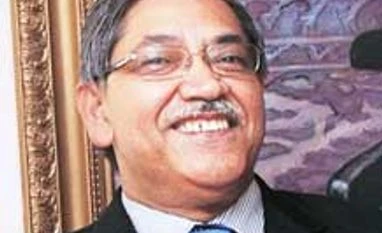
With new banks, customer service all set to improve: K C Chakrabarty
BS Reporter Mumbai The Reserve Bank of India today said customer service would be better once new banks come in. K C Chakrabarty, deputy governor, RBI, today said "if new banks come in, then many of our problems will be solved." Chakrabarty's comments assume significance as RBI is allowing new banks in the private sector, for which it has issued clarifications on the guidelines today.
He however said RBI had no number in mind as to how many licences would be issued. He said the number of core domestic banks was less than the number of foreign banks present in the country. "So, one demand should come from everybody that more banks should come in," he said addressing customers in the town hall event here.
The last time a new private bank was allowed was in 2004 when RBI issued licence to YES Bank. Since the liberalisation, 10 private banks were allowed, apart from the conversion of the government-run infra lender Industrial Development Bank of India (IDBI) into a bank in the late 1990s. Subsequently, three banks were merged into other banks and the number of private banks after liberalisation stands at eight.
The deputy governor also noted it is the endeavour of the central bank to increase the penetration of the banking system in unbanked areas. Various issues related to customer services were raised by customers at this event. A customer alleged that the Indian Banks Association (IBA) is running a cartel in terms of providing services, and customers are getting a raw deal. Chakrabarty retorted by saying: "If you feel IBA is running a cartel then go to the CCI (Competition Commission of India)... It's not RBI's job to look into cartels," he said.
RBI had earlier set up the Damodaran committee to look into issues related to customer services of banks. As a part of improving customer services, RBI had earlier waived the pre-payment penalty on home loans. In the last annual monetary policy announcement, RBI had told banks there should be no discrimination between home branch customers and non-home branch customers.
On the Cobrapost expose and subsequent investigation into alleged KYC violation, Chakrabarty said, "AML/KYC systems are fool-proof, but transactional error will happen. The system is robust. There may be laxity in finding out the error and taking corrective actions."
Earlier, the online magazine had alleged violation of money-laundering norms by several private and public sector banks in a sting operation. Chakrabarty said it's for the government to decide the penalty for violation of the norms.
Earlier, financial services secretary Rajiv Takru had said "the maximum penalty under the law is Rs 1 crore now, and that is very less. There is active discussion now on increasing the penalty limit."
"As a matter of fact, this (hike in penalty) was discussed at the RBI board and a point was made that the penalty amount is probably less," he had said then.

 "With new banks, customer service all set to improve: K C Chakrabarty")


 Connect with us on WhatsApp