Rana Kapoor, hard-driving executive who rarely said no to giving loans

Weak compliance, poor governance and greed led to the bank's failure as it lent to borrowers who did not have the ability to repay
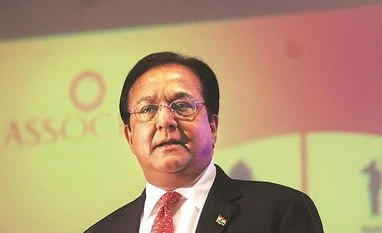
Rana Kapoor
Rana Kapoor had worked with Rabo India Finance at the time, and was slated to only be a co-promoter director; not head the bank.
Sachin P Mampatta Mumbai
6 min read Last Updated : Mar 09 2020 | 12:42 AM IST
When Rana Kapoor arrived for Enforcement Directorate (ED) questioning at the agency’s Ballard Estate office in Mumbai on Saturday, bespectacled and casually attired, he seemed a far cry from the hard-driving executive that made YES Bank one of India’s largest banking players since it began operations in 2003.

Kapoor had worked with Rabo India Finance at the time, and was slated to only be a co-promoter director; not head the bank. The bank had appointed Korn Ferry, an executive search firm, to find its first chief.  Discussions within the promoter group finally resulted in the decision that Rana Kapoor should become managing director and chief executive officer. Ashok Kapur, the other co-founder, was to be chairman. Kapoor put in his papers at Rabo, which began its own search for a new chief executive. 

Rana's beginnings at Bank of America and other foreign bank stints including one at ANZ Grindlays’ Investment Bank and his US education had raised questions as to why he would let go of a comfortable post at a foreign bank for something new. He answered in two words: “entrepreneurial joy”.

YES Bank co-founder Rana Kapoor arrives at a hospital in Mumbai for a medical check-up. He is under arrest for alleged money laundering. | Photo: Kamlesh Pednekar
This joy had him working at his office as torrential rain swept Mumbai in July 2005. He cleared his desk of pending papers ahead of a board meeting. Ultimately, the board meeting itself was postponed as two key board members couldn’t join amid the chaos in the city, which happened around the time the company was listed.

The listing itself could scarcely have gone better. The first trade for the stock was for fifty shares at a price of Rs 65. This was a 44 per cent gain over the issue price. Subsequent gains saw it enter the National Stock Exchange’s Nifty 50 index, a benchmark comprised of some of India’s largest and most well-known companies, and then in the 30-stock BSE Sensex. The bank was worth over Rs 80,000 crore as recently as September 2017.


The bank had grown at breakneck speed in the intervening years, helped perhaps by Rana Kapoor’s reputation as a banker, willing to aggressively write checks. He reportedly had successfully got his money back from some promoters even when other banks struggled, but it did not always work. Ultimately, it proved too much with the Reserve Bank of India reportedly growing unhappy with the bank’s practices.
Depositors may have acted presciently - total deposits of the bank shrunk for the first time in September 2019.

The bank's market capitalisation plummeted to Rs 4,132 crore on the BSE after news of the government’s decision to supersede the bank’s board and impose a moratorium a few days ago. Depositors began lining up to withdraw cash. They had been told that they can not take out more than Rs 50,000 until the issues are resolved

Analysts have pointed out that the bank had lent out too much money to industrialists who didn’t seem to be in a position to give it back. And it didn’t have enough capital to cover these advances either. The ED arrested Kapoor on Sunday morning alleging that the Kapoor family has taken kickbacks from companies that the bank lent money to.


The recent quarters had been a desperate attempt to get additional funding by the new CEO Ravneet Gill who came from Deutsche Bank after Kapoor was sacked by the Reserve Bank of India. Names of multiple investors had done the rounds, but nothing materialised. Kapoor’s aggressive lending practices hadn’t helped in building confidence in the bank.

Advances had grown in double-digits for the longest time. It only began to show signs of slowing down in 2019. The last quarter for which data is available actually shows that advances shrunk 6.1 per cent year-on-year as the bank grew increasingly tight-fisted.
Yes Bank co-founder Rana Kapoor after his arrest in Mumbai on Sunday morning. (Photo: Kamlesh Pednekar)
Quarterly net profit had been falling since a year before, with losses in every quarter from September 2018. The gross non-performing assets ratio, or bad loans as a percentage of total loans given out, rose from 1.6 per cent then to 7.4 per cent in September 2019. 

There were other issues too in YES Bank’s journey. This included a dispute with the late co-founder Ashok Kapur’s wife Madhu Kapur over the board representation, which turned bitter. The Bombay High Court had ultimately ruled in her favour. There were rumours of a truce between the two promoter families but the stock price didn’t show any traction. This was even as the RBI was reportedly unhappy with the way that divergences were handled at the bank, and declined to let Rana Kapoor continue as its head.  

Interestingly, depositors may have acted presciently - total deposits of the bank shrunk for the first time in September 2019. The bank has delayed announcing its December 2019 quarter numbers, which doesn’t portend well.


Kapoor’s shares were sold after lender-invoked pledges got triggered. He was reduced to holding only 900 shares worth Rs 60,000, according to a November 2019 news report. He had said he would never sell his shares in a September 2018 social media post, comparing them to diamonds he would pass on to future generations. Ultimately, he was out of the bank as both head and significant shareholder.
Yes Bank's bad loan surge

Early advertisements for the institution showed a banker saying “yes” to an entrepreneur looking for funds. Business Standard had also asked Rana Kapoor before operations began, why his venture was called YES Bank. "It's positive and has a reliable and trustworthy feel to it," he had said.

Investors and the depositors lining up outside outlets may now feel otherwise.

One subscription. Two world-class reads.

Already subscribed? Log in

Subscribe to read the full story →
*Subscribe to Business Standard digital and get complimentary access to The New York Times

Smart Quarterly

₹900

3 Months

₹300/Month

SAVE 25%

Smart Essential

₹2,700

1 Year

₹225/Month

SAVE 46%
*Complimentary New York Times access for the 2nd year will be given after 12 months

Super Saver

₹3,900

2 Years

₹162/Month

Subscribe

Renews automatically, cancel anytime

Here’s what’s included in our digital subscription plans

Exclusive premium stories online

  • Over 30 premium stories daily, handpicked by our editors

Complimentary Access to The New York Times

  • News, Games, Cooking, Audio, Wirecutter & The Athletic

Business Standard Epaper

  • Digital replica of our daily newspaper — with options to read, save, and share

Curated Newsletters

  • Insights on markets, finance, politics, tech, and more delivered to your inbox

Market Analysis & Investment Insights

  • In-depth market analysis & insights with access to The Smart Investor

Archives

  • Repository of articles and publications dating back to 1997

Ad-free Reading

  • Uninterrupted reading experience with no advertisements

Seamless Access Across All Devices

  • Access Business Standard across devices — mobile, tablet, or PC, via web or app

Topics :YES BankRana KapoorEnforcement DirectorateReserve Bank of IndiaRBI

Next Story


