Complete a first marathon and rejuvenate a major artery. That is the message of an inspiring new study of novice runners and their aortas.
The study finds that training for and finishing a marathon can spruce up arteries, leaving them more flexible, healthy and biologically younger than before, even if runners are older or slow.
But the study also raises some pointed questions about whether a lone marathon is the ideal goal for people hoping to improve their arterial health over the long term.
Inside most of us who are middle-aged or older, arteries are hardening. Our arteries, of course, carry oxygenated blood from our hearts and, when healthy and pliable, expand and contract like bellows as blood pulses through them, keeping the flow smooth and steady.
But with age, our arteries stiffen. Blood begins to jostle and crowd against the vessels’ inflexible walls, blood pressure rises, and organs that require an even, gentle stream of blood, like the kidneys and brain, can be affected.
Helpfully, some past research hints that exercise might alter this age-related arterial stiffening. Longtime older athletes, for instance, tend to have relatively supple, responsive arteries.
But most people are not longtime, competitive athletes, and it has not been clear if sedentary people can start to exercise and still improve the state of their arteries.
So, for the new study, published in the Journal of the American College of Cardiology, researchers at University College London and other institutions decided to track the arteries of a group of people who were new to exercise, targeting first-time entrants in an upcoming London Marathon.
The researchers zeroed in on race participants who had reported on entry forms that they were newcomers to the sport and to exercise in general, rarely working out before signing up. The scientists found more than 200 of these men and women, most of them middle-aged and all sedentary, and contacted them six months before race time.
These soon-to-be marathoners agreed to visit the university’s lab, completing health and fitness tests and a sophisticated scan of their aorta, designed to measure its flexibility. None of the group showed signs of heart disease or other serious health problems.
Each runner then began his or her preferred marathon-training program, with most jogging a few times a week. This training continued for six months, although some developed injuries or other concerns and dropped out. Ultimately, 136 men and women completed the race, in an average finishing time of 4.5 hours for the men and 5.5 hours for the women. A week or two later, they returned to the lab to repeat the tests.
Their aortas proved to be more flexible now. In fact, their arteries seemed to have shed the equivalent of about four years, in functional terms. The aorta of a 60-year-old marathoner in the study now expanded and contracted about as lithely as that of a 56-year-old participant did at the study’s start, and the 56-year-old’s arteries worked like those of a pre-race 52-year-old, and so on.
These improvements were most marked in older male runners and those whose finishing times had been slowest. They did not depend on changes in runners’ fitness or weight, which, in most cases, had been negligible. All that had mattered was that people had kept up with their training and raced.
These findings gratified the researchers, says Charlotte Manisty, a consulting cardiologist at University College London and the Barts Heart Center, who oversaw the new study. “We had not really known” whether the arteries of sedentary people “could or would benefit” from exercise training, she says, especially if the people were older or notably out of shape.
But these results do not consider the large number of would-be marathon racers in the study who did not make it to the start line. It is also unknown whether the rejuvenation of runners’ aortas is likely to last or if the benefits will be lost if they do not continue to run.

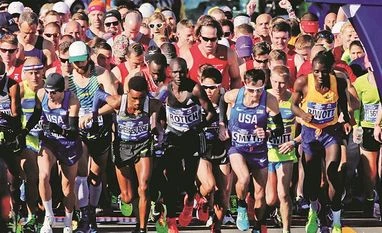 "Finishing a marathon can spruce up arteries, make them flexible: Study")










 Connect with us on WhatsApp