
5 ways how India stands to benefit from the US pulling out of TPP
United States President-elect Donald Trump on Tuesday said the US will quit the Trans-Pacific Partnership trade deal
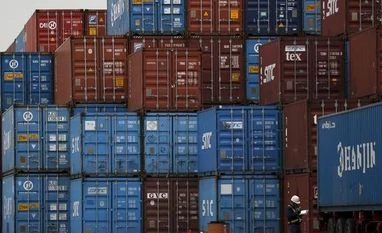 "5 ways how India stands to benefit from the US pulling out of TPP")
WebinarsNew
Deep DiveNew
Explore Business Standard
United States President-elect Donald Trump on Tuesday said the US will quit the Trans-Pacific Partnership trade deal
1) Access to lucrative US market to be cut for India's export competitors: The TPP positioned textile manufacturer Vietnam and information technology outsourcing powerhouse the Philippines in a favourable position to get access to the high-value American market. India's domestic textile industry has been continuously eclipsed by nations like Bangladesh and Vietnam with cheaper production costs and aggressive marketing. "Of India's $40-billion of textile export, $9 billion goes to the US. If Vietnam gets greater market access, this figure will see a decline of $2-3 billion," says economist Atul Mishra from the Confederation of Indian Textile Industry.
2) The Regional Comprehensive Economic Partnership deal to come into focus: The RCEP is a proposed trade deal between the 10 countries of the Asean (Association of Southeast Asian Nations) and FTAs with six other countries including Australia, China, India, Japan, South Korea and New Zealand. Negotiations, which formally began at the end of 2012, have progressively become more complicated after 15 rounds and four ministerial meetings. The absence of TPP will give member nations more reason to push for a successful RCEP at the earliest.
3) Pressure to conform with TPP standards in ongoing trade negotiations to slide: There has been pressure on India to conform to stricter standards of labour, intellectual property and investment, officials from the Ministry of Commerce have said. Countries present at the TPP and RCEP trade deals had been arguing in favour of it. India, however, has been opposed to such demands.
4) India's concerns over trade diversions and other non-tariff barriers to lessen: India had been wary of the effect of TPP on its own trade. Major issues of concern for the country have been the proliferation of non-tariff barriers (NTB) to trade as a result of TPP and greater trade diversion. Trade experts had warned that NTBs, which constitute various forms of trade restrictions like quotas, embargoes and sanctions, might be imposed on India by nations signatory to the TPP to keep the balance of trade with other member nations. Trade diversion was also a significant concern with TPP commanding great clout in dictating trade among third party nations and acquiring markets still untapped.
5) Greater chance of bilateral boost to trade by India and US: The TPP had been billed as a battle between the US and manufacturing powerhouse China over domination of global trade. Even if the US does not enter TPP to contain China, the nature of global commerce goes against isolationism. Thus, experts point out that the US will have to step up bilateral understandings on trade matters, even with India.
First Published: Nov 23 2016 | 2:53 PM IST


 Connect with us on WhatsApp