Home / World News / 7 things to know about the Iran nuclear deal
7 things to know about the Iran nuclear deal
After 18 days of negotiations with Iran, the end result is a 159-page document that tells minute details and technicalities of nuclear development and sanctions
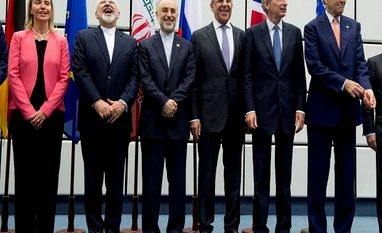
(From left) EU High Representative Federica Mogherini; Iran Foreign Minister M. J. Zarif; Iranian Atomic Energy Organization head A. A. Salehi; Russia Foreign Minister S.Lavrov; England Foreign Secretary P. Hammond and US Secretary of State J. Kerry
After hectic negotiations in Vienna for 18 days, the US, along with five other countries (China, France, Russia, the UK, and Germany), finally brokered a long-awaited nuclear deal with Iran on Tuesday. The end result is a 159-page document that tells minute details and technicalities of nuclear development and sanctions.
Here are seven key things you need to know about the deal:
1)Breakout time
The deal extends the “breakout” time — the period required for Iran to produce enough bomb-grade material for a singular nuclear weapon — to at least one year.
2)Stockpile
Iran will reduce its current stockpile of low-enriched uranium by 98 per cent for the next 15 years. This will ensure the country does not have the amount of fissile material required to produce a nuclear bomb.
3)Access to information
Iran will provide the International Atomic Energy Agency (IAEA) greater access and information, and allow the agency to investigate suspicious sites or allegations of covert facilities related to uranium enrichment anywhere in the country.
4)Redesign
Iran has agreed to redesign and rebuild the Arak reactor, so it will not produce weapons-grade plutonium. Iran will not build additional heavy-water reactors for 15 years.
Iran has agreed to transform its deeply buried plant at Fordo into a center for science research. Iran has also agreed to limit enrichment to 3.7 per cent and to cap its stockpile of low-enriched uranium at 300 kg for 15 years. That is considered insufficient for a bomb rush.
6)Sanctions
Under the deal, all sanctions imposed by the UNSC will be lifted. This is good news for the Iranian economy, which shrank 20 per cent due to the ban on the country’s oil in the international market.
7)Snap-back provision
The deal struck by the Barack Obama administration in the US includes a ‘snap-back’ provision, meaning the sanctions will be imposed again if Iran fails to meet the required obligations.
The Background:
The Iran nuclear deal dates back to August 2002, when Western intelligence services and an Iranian opposition group discovered the country was producing at a secret site in the eastern city of Natanz enriched uranium that could lead to material suitable for weapons.
The United Nations imposed the first sanctions against Iran in 2006, banning the sale of sensitive nuclear technology. Five more Security Council resolutions were passed by 2010, tightening the sanctions on Iran.

 "7 things to know about the Iran nuclear deal")


 Connect with us on WhatsApp