Brexit impact: IMF warns of repercussions for global economy
Dampening of growth in the near term is likely on 'significant uncertainty' created due to UK's exit from the EU
Press Trust of India Washington Britain's decision to leave the European Union has created "significant uncertainty" that will have repercussions not only for UK and Europe, but the global economy, the International Monetary Fund has warned.
IMF spokesperson Gerry Rice said the Brexit was likely to cause a dampening of growth in the near term, and urged policy makers to act decisively while dealing with the situation.
"Brexit has created significant uncertainty, and we believe this is likely to dampen growth in the near term, particularly in the UK, but with repercussions also for Europe and the global economy," he said yesterday.
Rice said policy makers need to stand ready to act, if the impact of financial market turbulence and higher uncertainty threaten to materially weaken the global outlook, adding that "decisive policies will make a difference."
"Prolonged periods of uncertainty and associated declines in consumer and business confidence would mean even lower growth and again, policymakers in the UK and the EU have a key role to play in helping to reduce the uncertainty during this period," he said.
Rice said the IMF sees the near-term risk for the UK, the EU and the global economy arising mainly from macroeconomic and financial market impact, and a sizeable increase in uncertainty, including on the political front.
"One notable source of this uncertainty concerns the terms of the future relationship between the UK and the EU, and these relate to questions about how long it will take to decide those terms, how the new relationship will impact business, and other actors," he said.
The IMF has encouraged both the UK and the EU to work collaboratively toward a smooth and predictable transition.
He said the IMF "strongly supports" the commitments made and steps taken by major central banks, including the Bank of England, the European Central Bank, the US Fed and the Bank of Japan, among others, to provide liquidity and curtail excess financial volatility.

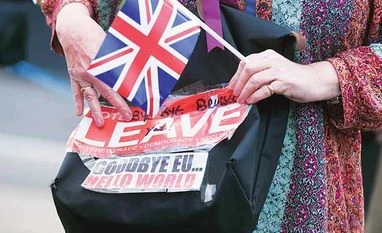 "Brexit impact: IMF warns of repercussions for global economy")

