Bringing US economy to its knees, to being a friend: Opec turns 60

Founded in Baghdad on September 14, 1960 to counter the power of seven US and British oil companies, Opec has repeatedly yielded to pressure from Washington
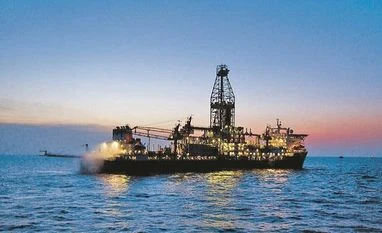
oil, gas, offshore, drill, high, petrol, crude
Saudi Arabia has been the leading Opec producer for decades, giving it the biggest sway over policy, but the sidelining of Iran and Venezuela has only increased its influence
Alex Lawler | Reuters London
4 min read Last Updated : Sep 14 2020 | 12:18 AM IST
In 1973, Arab members of the Organization of Petroleum Exporting Countries (Opec) brought the US economy to its knees. Now, the cartel created 60 years ago is more likely to do Washington’s bidding.
 
Since Saudi Arabia and other Arab Opec members imposed their famous oil embargo as retribution for US support for Israel during the Yom Kippur War, shifts in global politics and a surge in America’s oil production have tamed the group. Opec’s most hawkish members, Iran and Venezuela, have been sidelined by US sanctions while its kingpin, Saudi Arabia, has shown it would rather appease Washington than risk losing US support, current and former Opec officials say.
 
While Opec as a bloc resisted US pressure to lower oil prices for decades, notably in 2011 during the uprising against Libya’s Muammar Gaddafi, its record over the past three years has largely been one of capitulation, these officials say.
 
Founded in Baghdad on September 14, 1960 to counter the power of seven US and British oil companies, Opec has repeatedly yielded to pressure from Washington to pump more oil since US President Donald Trump took office at the start of 2017.
Trump has regularly called for lower gasoline prices to help US consumers. And when prices got too low for US drilling companies to make money this year, Opec hashed out a deal to bring them back up slightly, in an agreement spurred on by Washington's threat to reduce its military backing for Riyadh, sources have told Reuters.
 
 “Trump orders from Saudi Arabia what he needs for the oil price - and he is served,” Chakib Khelil, who was Algeria’s oil minister for a decade and Opec’s president in 2001 and 2008, told Reuters. “So indeed Opec has changed.”


The Saudi Energy Ministry declined to comment. The White House declined to comment. Reuters spoke to eight current and former Opec officials, representing over a third of the group’s output, as well as analysts, traders and investors to ask how US sanctions on Iran and Venezuela had affected Saudi Arabia’s influence within Opec, and whether that had changed the dynamic with Washington. An Opec official at the group’s Vienna headquarters declined to comment, saying Reuters should ask member states. Oil and other government officials in Iran and Venezuela did not immediately respond to requests for comment.
 
US output soars
 
Saudi Arabia has been the leading Opec producer for decades, giving it the biggest sway over policy, but the sidelining of Iran and Venezuela has only increased its influence.
 
Iran’s share of Opec output has nearly halved to 7.5 per cent since 2010 while Venezuela’s has collapsed to 2.3 per cent from almost 10 per cent, according to Reuters calculations based on Opec data. Saudi Arabia’s share, meanwhile, has risen 7 percentage points to 35 per cent. Iran and Venezuela, which founded Opec along with Iraq, Kuwait and Saudi Arabia, had routinely opposed any moves to bring oil prices down in the face of U.S. pressure. The increased dominance of Saudi Arabia within Opec has also come at a time of higher US oil and gas production, which has turned the United States into the world’s biggest petroleum producer and slashed its dependence on foreign fuel.
 
US production more than doubled in a decade to reach over 12 million barrels a day in 2019, according to the Energy Information Administration, as improved drilling technology made previously untapped basins accessible.
 
‘Gift to Trump’
 
In 2011, when Libyan output was hit by the uprising against Gaddafi, Saudi Arabia tried to convince OPEC to lift production to lower prices. But Algeria, Angola, Ecuador, Iran, Iraq, Libya and Venezuela all resisted. “Previously, you had a bloc which could become quite vocal and actually upend meetings,” said Samuel Ciszuk, who founded consultancy ELS Analysis and used to work for the Swedish Energy Agency.
“Now, Iran and Venezuela still have votes but they are sidelined and have such desperate economic and marketing situations that other countries are more careful about lining up politically with them,” he said.

One subscription. Two world-class reads.

Already subscribed? Log in

Subscribe to read the full story →
*Subscribe to Business Standard digital and get complimentary access to The New York Times

Smart Quarterly

₹900

3 Months

₹300/Month

SAVE 25%

Smart Essential

₹2,700

1 Year

₹225/Month

SAVE 46%
*Complimentary New York Times access for the 2nd year will be given after 12 months

Super Saver

₹3,900

2 Years

₹162/Month

Subscribe

Renews automatically, cancel anytime

Here’s what’s included in our digital subscription plans

Exclusive premium stories online

  • Over 30 premium stories daily, handpicked by our editors

Complimentary Access to The New York Times

  • News, Games, Cooking, Audio, Wirecutter & The Athletic

Business Standard Epaper

  • Digital replica of our daily newspaper — with options to read, save, and share

Curated Newsletters

  • Insights on markets, finance, politics, tech, and more delivered to your inbox

Market Analysis & Investment Insights

  • In-depth market analysis & insights with access to The Smart Investor

Archives

  • Repository of articles and publications dating back to 1997

Ad-free Reading

  • Uninterrupted reading experience with no advertisements

Seamless Access Across All Devices

  • Access Business Standard across devices — mobile, tablet, or PC, via web or app

Topics :US economyOPECCrude Oil

Next Story



