Home / World News / Central banks to pour money into major economies despite sharp rebound
Central banks to pour money into major economies despite sharp rebound
The outlook suggests officials still want to guarantee the recovery from last year's coronavirus recession by maintaining ultra-low borrowing costs and asset-buying programs
premium
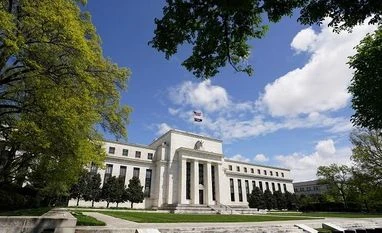
The Federal Reserve building in Washington DC. Photo: Reuters
The aggressive rebound in global economic growth still isn’t enough for most of the world’s central banks to pull back on their emergency stimulus. In Bloomberg’s quarterly review of monetary policy covering 90 per cent of the world economy, the Federal Reserve, European Central Bank and Bank of Japan are among the 16 institutions set to hold interest rates this year.
The outlook suggests officials still want to guarantee the recovery from last year’s coronavirus recession by maintaining ultra-low borrowing costs and asset-buying programs.
Six central banks, most of them in emerging markets, are still predicted to hike, including Brazil, Russia and Nigeria. Turkey is the only one of those monitored which is forecast to cut borrowing costs this year.
US Federal Reserve
A key question for Fed Chair and his colleagues is when to start talking about scaling back their massive bond purchases if the economy continues to recover as they expect. Officials have vowed to keep buying $120 billion of Treasuries and mortgage-backed bonds every month until they see “substantial further progress” on inflation and employment. The Fed has also signalled it expects to keep rates near zero through 2023.
European Central Bank
The ECB has pledged to keep financing conditions for governments, companies and households “favourable” until the coronavirus crisis phase is over, using its $2.2 trillion Pandemic Emergency Purchase Program to keep bond yields low, and dishing out ultra-cheap loans to banks. PEPP is due to run until the end of March 2022 and while policy makers say they won’t spend the full amount unless needed, most economists expect them to do so.
Bank of Japan
The Bank of Japan is likely to be keep its main policy settings on cruise control after its biggest policy review since 2016 in March. The review gave the BOJ more scope to reduce its asset buying after a fine-tuning it characterised as a shoring up of its stimulus framework for the longer term. A quarterly outlook report in April is expected to show that the BOJ doesn’t see price growth reaching a stable 2 per cent before Governor Haruhiko Kuroda steps down in April 2023.
Bank of England
Bank of England Governor Andrew Bailey is firmly on the fence about whether his next move is to administer another dose of stimulus or monetary tightening to the UK economy. Financial markets already have priced out the prospect of negative rates, moving gilt yields and the pound higher than they were a year ago.
Bank of Canada
The Bank of Canada is signaling it will be one of the first Group of Seven central banks to start paring back monetary policy support as the nation’s economic recovery from the Covid-19 crisis accelerates. Canada’s central bank has been buying a minimum of $3.2 billion in government bonds each week, accumulating over C$250 billion of the securities over the past year.
People’s Bank of China
The PBOC cut lending rates and deployed various quantitative tools to inject liquidity into the pandemic-hit economy last year, on top of asking banks to increase loans. With the economy’s recovery well on track, the central bank is seeking to rein in its stimulus without derailing that rebound. The PBOC is likely to normalise policy by moderating credit expansion rather than hiking rates, economists say.
Reserve Bank of India
India’s central bank formally embarked on the path of QE in early April, pledging to buy an assured amount of sovereign bonds this quarter as it fights to keep borrowing costs low and support a recovery in Asia’s third-largest economy. Hamstrung by underlying price pressures that could gather pace in coming months, Governor Shaktikanta Das and five other members of the MPC voted to keep the repo rate unchanged at 4 per cent.
Bank of Russia
The Bank of Russia surprised markets by starting its rate-hiking cycle earlier than expected. The inflation spike proved to be more prominent than policy makers thought before, Governor Elvira Nabiullina said after the board raised the key rate by 25 bps in March and signalled more increases.
Central Bank of Brazil
Brazil’s central bank has begun paring back monetary stimulus as inflation surges despite a new wave of the pandemic that threatens the economic recovery.
Read this article for free
Register to continue reading premium journalism and analysis from Business Standard.

 "Central banks to pour money into major economies despite sharp rebound")











