Home / World News / China Oct industrial output, sales beat expectations despite Covid curbs
China Oct industrial output, sales beat expectations despite Covid curbs
China's industrial output grew at a surprisingly faster pace in October, despite fresh curbs to control Covid outbreaks and supply shortages that have threatened to undercut the recovery in economy.
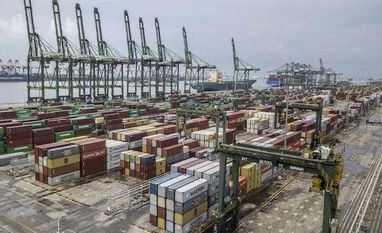
Shipping containers on the dockside at Tianjin Port in Tianjin, China. (Photo: Bloomberg)
BEIJING (Reuters) - China's industrial output grew at a surprisingly faster pace in October, despite fresh curbs to control COVID-19 outbreaks and supply shortages that have threatened to undercut the recovery in the world's second-largest economy.
China's industrial output grew 3.5% in October from the same period a year ago, official data showed on Monday, accelerating from a 3.1% increase in September. Retail sales growth also picked up.
The industrial output growth beat expectations of a 3.0% year-on-year increase in a Reuters poll of analysts.
Retail sales in October rose 4.9% on the year compared with the same period last year. Analysts in the poll had expected them to grow 3.5% in October after rising 4.4% in September.
Fixed asset investment slowed however, rising 6.1% in the first 10 months from the same period a year earlier, compared with the 6.2% increase tipped by a Reuters poll and the 7.3% rise in January-September.
China's sprawling manufacturing sector has slowed this year, with output in September growing at its most feeble pace since March 2020 due to environmental curbs, power rationing and higher raw material prices.
Sentiment in China's property market has been shaken by a deepening debt crisis, with property giant China Evergrande and Kaisa Group grappling with looming defaults.
Regulators and the state council think-tank have held meetings with developers in the past few weeks, and the market is expecting some easing in credit and housing policies to prevent a hard landing for the sector.
China is also battling a new wave of COVID-19 cases in the north.
The economy had staged an impressive rebound from last year's pandemic slump but has since lost some momentum.
Gross domestic product expanded 4.9% from a year ago in the third quarter, its slowest pace in a year.
China's official purchasing managers' index for October https://www.reuters.com/world/china/china-factory-activity-contracts-second-month-official-pmi-2021-10-31showed factory activity declined for a second straight month in October, hurt by persistently high raw material prices and softer domestic demand.
(Reporting by Gabriel Crossley and Albee Zhang; Editing by Sam Holmes and Ana Nicolaci da Costa)
(Only the headline and picture of this report may have been reworked by the Business Standard staff; the rest of the content is auto-generated from a syndicated feed.)

 "China Oct industrial output, sales beat expectations despite Covid curbs")


 Connect with us on WhatsApp