China's ethanol love likely to be an antidote for slumping US Farms

Biofuel, made from corn, helps support farm-belt growth
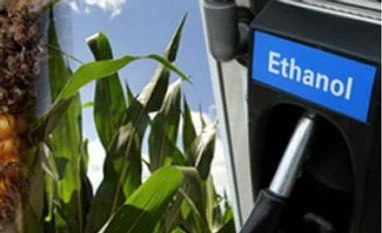
Ethanol
Mario Parker | Bloomberg
Last Updated : Dec 22 2018 | 8:39 PM IST
A little love from China in the U.S. ethanol market during the trade-war detente between Washington and Beijing could go a long way in soothing the ailing American farm economy.

That’s according to Mark Marquis, chief executive officer and co-founder of closely held Marquis Energy LLC, a Hennepin, Illinois-based producer that operates the world’s largest dry mill ethanol plant. His company shipped one of the last cargoes of U.S.-made ethanol to China in April, just as the spat between President Donald Trump and his counterpart President Xi Jinping deepened.

Since then, China’s retaliatory tariffs choked off demand and contributed to a slump in the ethanol industry that’s squeezed margins and forced output cuts.

While duties on U.S.-grown soybeans and pork have received the lion’s share of attention, the Asian country has 70 percent tariffs on American-made ethanol, mostly made from corn in the Midwest. There are also fees on a byproduct known as dried distillers grains, which is fed to livestock. The biofuel is a key component of the farm-belt economy, with about 38 percent of U.S. corn production destined for ethanol mills.

‘Quick Fix’
If China were to resume purchases of American ethanol, like the nation’s done for soybeans amid the trade truce, it would not only mean improvements for the biofuel industry, but could also aid U.S. agriculture overall, Marquis said.

If the U.S. can “ship 200 million or 300 million gallons into China, it would improve the margin environment in ethanol,” he said in a telephone interview. “You wouldn’t be having these layoffs and low corn prices and whatnot. It’s a quick fix for the ag economy to just get ethanol and DDGs going back into China, and I think we’d have an immediate snapback of profitability in biofuels and in corn production.”

In recent years, ethanol companies expanded capacity with an eye toward meeting robust demand from China. The Asian country outlined a plan to widen consumption by 2020. With the trade war, the American ethanol industry is reeling. Pacific Ethanol Inc., one of the largest U.S. producers, said Dec. 19 that it idled a mill in Aurora, Nebraska, and laid off a third of its workforce there.

“Our industry was encouraged by the recent announcement that China will resume buying U.S. soybeans, and we remain hopeful that U.S. ethanol and distillers grains will be next,” Geoff Cooper, president and CEO of the Renewable Fuels Association, a Washington-based trade group, said Thursday in an emailed statement.

China’s absence “has been painful for our industry and significantly contributed to our current economic challenges,” with low prices and thin or “below break-even” returns, Cooper said, noting that the Asian country was once the third-biggest importer of American ethanol.

Plant Closures
Without the return of Chinese demand, things for the U.S. ethanol industry go from bad to dire, according to Marquis, who runs a 300 million-gallon-a-year plant near the Illinois River. He’s heard of as many as eight plants that have shut down amid the poor margins, with “maybe two or three more coming.”

“It’s going to end up being that there’s some of the maybe more marginal producers -- whether it’s based on poor logistics, poor efficiency, poor scale size, poor cash-management situations -- where some of them are going to shut down and probably never restart,” Marquis said.

He added that the U.S. also faces trade barriers in Europe, Brazil and Peru. In the meantime, the industry has been pushing the Trump administration to prod China to resume ethanol purchases. Trump has repeatedly professed his affection for ethanol and farmers, a key constituency that helped him reach the White House.

Growth Energy, a Washington-based ethanol trade group, has been in touch with the U.S. Trade Representative and its chief agricultural negotiator, Gregg Doud, “often and directly,” Craig Willis, senior vice president of global markets at the group, said in an emailed statement.

“If we continue down this path, China’s tariffs have the potential to have a very material effect on ethanol demand and is a critical item we need resolved to move the bottom line for our producers,” Willis said.

One subscription. Two world-class reads.

Already subscribed? Log in

Subscribe to read the full story →
*Subscribe to Business Standard digital and get complimentary access to The New York Times

Smart Quarterly

₹900

3 Months

₹300/Month

SAVE 25%

Smart Essential

₹2,700

1 Year

₹225/Month

SAVE 46%
*Complimentary New York Times access for the 2nd year will be given after 12 months

Super Saver

₹3,900

2 Years

₹162/Month

Subscribe

Renews automatically, cancel anytime

Here’s what’s included in our digital subscription plans

Exclusive premium stories online

  • Over 30 premium stories daily, handpicked by our editors

Complimentary Access to The New York Times

  • News, Games, Cooking, Audio, Wirecutter & The Athletic

Business Standard Epaper

  • Digital replica of our daily newspaper — with options to read, save, and share

Curated Newsletters

  • Insights on markets, finance, politics, tech, and more delivered to your inbox

Market Analysis & Investment Insights

  • In-depth market analysis & insights with access to The Smart Investor

Archives

  • Repository of articles and publications dating back to 1997

Ad-free Reading

  • Uninterrupted reading experience with no advertisements

Seamless Access Across All Devices

  • Access Business Standard across devices — mobile, tablet, or PC, via web or app

Next Story


