China's factory inflation hits six-month low on government curbs

The world's second-biggest economy faces multiple headwinds, weighed down by persistent weakness in the property sector and strict anti-coronavirus measures
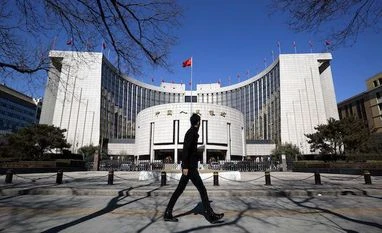
China central bank, People's Bank of China
Photo: Bloomberg
Reuters
2 min read Last Updated : Feb 16 2022 | 9:56 AM IST
 China's factory-gate inflation cooled to its slowest pace in six months in January, official data showed on Wednesday, as government measures to control surging raw material costs weighed on producer prices.

The producer price index (PPI) increased 9.1% from a year ago, the data showed, slower than the 9.5% growth tipped by a Reuters poll and a 10.3% gain in December, the National Bureau of Statistics (NBS) said in a statement. It was the weakest pace since July.

Consumer price inflation also slowed year-on-year in January, the data showed.

The world's second-biggest economy faces multiple headwinds, weighed down by persistent weakness in the property sector and strict anti-coronavirus measures that have sapped consumer confidence and spending.

But steady falls in factory-gate price inflation from October's 26-year high have provided a buffer to downstream firms struggling with high raw material costs and supply shocks.

Globally, inflation is likely to persist for some time, but China's ability to cope with abnormal price fluctuations has improved, the country's state planner said earlier this month.

The supply of energy sources such as coal, oil and gas will be "guaranteed", the National Development and Reform Commission (NDRC) said, noting it expects producer price inflation to slow further this year while consumer price inflation picks up.

China's consumer price index (CPI) inched up 0.9% last month from a year earlier. Economists in a Reuters poll had expected a 1% rise, after a 1.5% uptick in December.

Analysts believe cooling inflation could provide room for the central bank to ease policy to support the slowing economy.

China's central bank has cut interest rates and pumped more cash into the financial system to lower borrowing costs, with more easing steps expected.

(Reporting by Liangping Gao and Ryan Woo; Editing by Sam Holmes and Christian Schmollinger)

One subscription. Two world-class reads.

Already subscribed? Log in

Subscribe to read the full story →
*Subscribe to Business Standard digital and get complimentary access to The New York Times

Smart Quarterly

₹900

3 Months

₹300/Month

SAVE 25%

Smart Essential

₹2,700

1 Year

₹225/Month

SAVE 46%
*Complimentary New York Times access for the 2nd year will be given after 12 months

Super Saver

₹3,900

2 Years

₹162/Month

Subscribe

Renews automatically, cancel anytime

Here’s what’s included in our digital subscription plans

Exclusive premium stories online

  • Over 30 premium stories daily, handpicked by our editors

Complimentary Access to The New York Times

  • News, Games, Cooking, Audio, Wirecutter & The Athletic

Business Standard Epaper

  • Digital replica of our daily newspaper — with options to read, save, and share

Curated Newsletters

  • Insights on markets, finance, politics, tech, and more delivered to your inbox

Market Analysis & Investment Insights

  • In-depth market analysis & insights with access to The Smart Investor

Archives

  • Repository of articles and publications dating back to 1997

Ad-free Reading

  • Uninterrupted reading experience with no advertisements

Seamless Access Across All Devices

  • Access Business Standard across devices — mobile, tablet, or PC, via web or app

Topics :InflationChinaConsumer Price Index

Next Story


