
China's holiday spending plunges to seven-year low on Covid curbs
Holiday spending during China's Golden Week has plunged to its lowest level in seven years, as broad Covid curbs discouraged people from travelling or spending
 "China's holiday spending plunges to seven-year low on Covid curbs")
WebinarsNew
Deep DiveNew
Explore Business Standard
Holiday spending during China's Golden Week has plunged to its lowest level in seven years, as broad Covid curbs discouraged people from travelling or spending
Holiday spending during China's Golden Week has plunged to its lowest level in seven years, as broad Covid curbs discouraged people from travelling or spending, while a darkening economic outlook continues to erode consumer confidence, the media reported.
Tourist spending for the week-long holiday that started on October 1 declined 26 per cent to 287.2 billion yuan ($40.4 billion) year-on-year, according to figures from the Ministry of Culture and Tourism on Friday. That's the lowest figure since 2014, and less than half of the pre-pandemic level in 2019, according to government statistics from previous years, the CNN reported.
The National Day break is one of China's longest public holidays and usually a peak season for travel and spending.
But this year, people were deterred from travelling by a resurgence of the virus and stringent Covid restrictions. Lockdowns and other control measures have intensified in recent weeks, including in some popular tourist destinations.
Consumer sentiment also took a hit from rising economic woes, which are mainly a result of Beijing's ongoing zero-Covid policy and a deepening slump in the property market, CNN reported.
"The soft pack of holiday data is hardly a surprise with new Covid outbreaks and tighter containment measures ahead of the Party Congress," said Citi analysts in a research report on Sunday, pointing to this month's gathering of Communist Party elites in Beijing at which Chinese leader Xi Jinping is widely expected to break with tradition and be appointed to a third term in power.
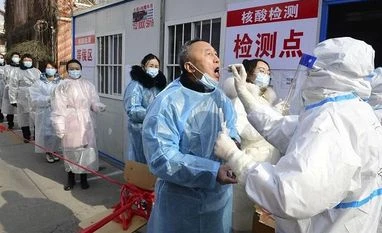
China is the world's last major economy still enforcing strict zero-Covid measures, which aim to stamp out chains of transmission through border restrictions, mass testing, extensive quarantines, and uncompromising snap lockdowns, CNN reported.
The ruling Communist Party has used the zero-Covid strategy to argue that its political model is superior to Western democracies, and Xi has thrown his weight behind the policy.
For local officials, doubling down on zero-Covid is a way to toe the Party line, demonstrate their loyalty to Xi, and prevent any large-scale outbreak that could jeopardize their career weeks before the Party Congress.
In this month alone, the entire region of Xinjiang, home to 22 million people, banned all residents from leaving its borders, only weeks after it had begun relaxing restrictions from a stringent extended lockdown. While last week, hundreds of tourists were stranded in an airport in the southwestern province of Yunnan after authorities imposed a snap lockdown, CNN reported.
--IANS
san/pgh
(Only the headline and picture of this report may have been reworked by the Business Standard staff; the rest of the content is auto-generated from a syndicated feed.)
First Published: Oct 10 2022 | 6:51 PM IST

