
Climate change responsible for intensifying Hurricane Ian's rainfall by 10%
Climate change added at least 10% more rain to Hurricane Ian, a study prepared immediately after the storm shows
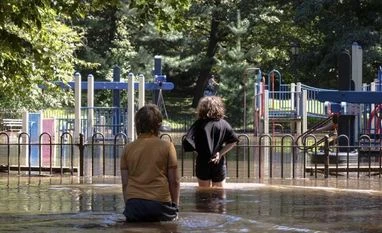 "Climate change responsible for intensifying Hurricane Ian's rainfall by 10%")
WebinarsNew
Deep DiveNew
Explore Business Standard
Climate change added at least 10% more rain to Hurricane Ian, a study prepared immediately after the storm shows
Climate change added at least 10% more rain to Hurricane Ian, a study prepared immediately after the storm shows.
Thursday's research, which is not peer-reviewed, compared peak rainfall rates during the real storm to about 20 different computer scenarios of a model with Hurricane Ian's characteristics slamming into the Sunshine State in a world with no human-caused climate change.
The real storm was 10% wetter than the storm that might have been," said Lawrence Berkeley National Lab climate scientist Michael Wehner, study co-author.
Forecasters predicted Ian will have dropped up to two feet (61 cm) of rain in parts of Florida by the time it stopped.
Wehner and Kevin Reed, an atmospheric scientist at Stony Brook University, published a study in Nature Communications earlier this year looking at the hurricanes of 2020 and found during their rainiest three-hour periods they were more than 10% wetter than in a world without greenhouse gases trapping heat. Wehner and Reed applied the same scientifically accepted attribution technique to Hurricane Ian.
A long-time rule of physics is that for every extra degree of warmth Celsius (1.8 degrees Fahrenheit), the air in the atmosphere can hold 7% more water. This week the Gulf of Mexico was 0.8 degrees warmer than normal, which should have meant about 5% more rain. Reality turned out to be even worse. The flash study found the hurricane dropped double that - 10% more rain.
Ten per cent may not sound like a lot, but 10% of 20 inches is two inches, which is a lot of rain, especially on top of the 20 inches that already fell, Reed said.
Other studies have seen the same feedback mechanisms of stronger storms in warmer weather, said Princeton University atmospheric scientist Gabriel Vecchi, who wasn't part of the study.
MIT hurricane researcher Kerry Emanuel said in general, a warmer world does make storms rainier. But he said he is uncomfortable drawing conclusions about individual storms.
This business above very very heavy rain is something we've expected to see because of climate change, he said. We'll see more storms like Ian.
Princeton's Vecchi said in an email that if the world is going to bounce back from disasters we need to plan for wetter storms going forward, since global warming isn't going to go away.
(Only the headline and picture of this report may have been reworked by the Business Standard staff; the rest of the content is auto-generated from a syndicated feed.)
First Published: Sep 30 2022 | 11:29 AM IST


 Connect with us on WhatsApp