
Coca-Cola, PespiCo and others agree to limit sugar in drinks in Singapore
The decision comes as a part of a campaign to fight diabetes
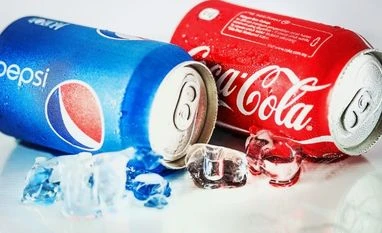 "Coca-Cola, PespiCo and others agree to limit sugar in drinks in Singapore")
WebinarsNew
Deep DiveNew
Explore Business Standard
The decision comes as a part of a campaign to fight diabetes
Seven major drinks companies including Coca-Cola and PepsiCo will limit the sugar content of drinks they sell in Singapore, as part of the city-state's campaign to fight diabetes.
Singapore is one of the first countries in Asia to target sugary drinks, bringing it in line with many Western nations that have sought to mitigate the health risks associated with sugar through measures such as taxes and warning labels.
Globally, beverage firms have been reworking recipes, racing to cut sugar and introduced more options to cater to increasingly health-conscious consumers.
On Tuesday, Singapore's ministry of health said the seven firms had signed an industry pledge to remove by 2020 drinks that contain more than 12 percent sugar from their portfolios of sugar-sweetened beverages.
As well as Coca-Cola and PepsiCo, the companies include F&N Foods, Malaysia Dairy Industries, Nestle, Pokka and Yeo Hiap Seng.
"In addition to this industry commitment, Coca-Cola Singapore is making an additional commitment to reduce the sugar content in our portfolio of sugar-sweetened beverages by 10 percent by 2020," Coca-Cola said in an email to Reuters.
It said it had been reducing sugar and calories across many of its brands, and offering more new drinks with low sugar content or no added sugar.
Daily sugar consumption per capita from soft drinks has risen since 2010 to 6.08 grams in Asia-Pacific in 2016, with Singapore at 11.99 grams, according to market research firm Euromonitor. Consumption has been trending lower in Europe and the United States, but it is still higher than in Asia-Pacific.
"Governments in Asia are actively promoting healthy consumption, such as Malaysia which launched its Healthier Choices Logo in April 2017," said Euromonitor International analyst Nathanael Lim. "Consumers also have an increasing preference for beverages containing natural ingredients with zero sugar."
The World Health Organization said last year drinking fewer calorific sweet drinks was the best way to curb excessive weight and prevent chronic diseases such as diabetes, although fat and salt in processed foods were also to blame.
Among Asian countries, the Philippines has slapped levies on sugar-sweetened beverages, while Indonesia and India have been considering similar taxes.
Singapore Prime Minister Lee Hsien Loong mentioned the drinks makers' agreement in a speech on Sunday, in which he also urged people to drink water, eat wholemeal bread and brown rice, but did provide details.
(Reporting by Aradhana Aravindan; Additional reporting by Karishma Singh in SINGAPORE; Editing by Mark Potter)
First Published: Aug 22 2017 | 6:27 PM IST


